

The Emerald Cut Carat Sizes Chart You Need Before Buying
When evaluating emerald cut carat sizes, one of the most common surprises for diamond buyers is learning that carat weight is a measure of weight, not surface area. A carat equals exactly 0.200 grams. How those 200 milligrams are distributed across the length, width, and depth of the stone dramatically alters its visible footprint on your finger.
Because emerald cut diamonds belong to the step-cut family, they feature long, linear facets arranged parallel to the girdle. Unlike brilliant cuts (such as round or oval diamonds) that use triangular and kite-shaped facets to bounce light back in tiny, scattered flashes, an emerald cut creates long, sweeping reflections. This unique geometry requires a balance between length, width, and depth.
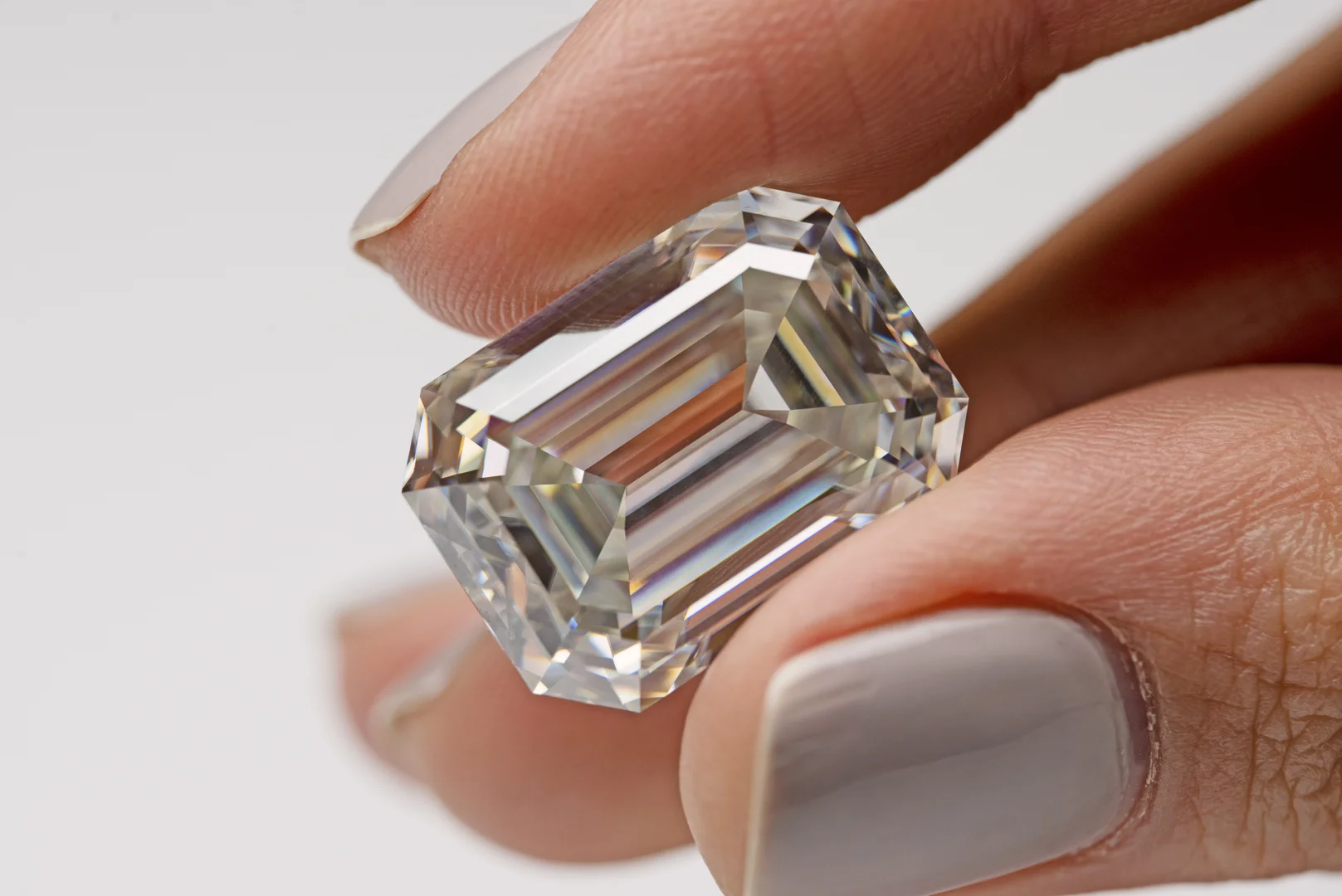
If an emerald cut is too deep, some of its weight may be concentrated below the surface, making the diamond appear smaller from above than its carat weight might suggest. A diamond with unsuitable proportions may also allow light to pass through rather than reflect back to the viewer, affecting its appearance. This is one reason to compare both millimeter dimensions and the individual stone's visual performance.
To evaluate emerald cut carat sizes accurately, you must focus on the face-up millimeter measurements (length x width) alongside the carat weight.
| Carat Weight | Approximate Millimeter Size (L x W) | Typical Aspect Ratio | Relative Finger Coverage |
|---|---|---|---|
| 0.25 ct | 4.2 x 3.0 mm | 1.40:1 | Minimal, delicate accent |
| 0.50 ct | 5.3 x 3.8 mm | 1.40:1 | Subtle, understated solitaire |
| 0.75 ct | 6.1 x 4.4 mm | 1.40:1 | Balanced, classic proportion |
| 1.00 ct | 6.7 x 4.8 mm | 1.40:1 | High-demand, timeless staple |
| 1.25 ct | 7.2 x 5.2 mm | 1.40:1 | Above-average finger presence |
| 1.50 ct | 7.7 x 5.5 mm | 1.40:1 | Pronounced length and coverage |
| 1.75 ct | 8.1 x 5.8 mm | 1.40:1 | Impressive vertical extension |
| 2.00 ct | 8.4 x 6.0 mm | 1.40:1 | Striking, luxurious coverage |
| 2.50 ct | 9.1 x 6.5 mm | 1.40:1 | Commanding architectural scale |
| 3.00 ct | 9.7 x 6.9 mm | 1.40:1 | Dramatic statement footprint |
| 4.00 ct | 10.6 x 7.6 mm | 1.40:1 | High-exclusivity presence |
| 5.00 ct | 11.5 x 8.2 mm | 1.40:1 | Exceptional, high-carat scale |
These measurements are approximate. Actual dimensions vary with a diamond's proportions and cut, so compare the listed measurements with the specifications of the individual stone.
Comparing Emerald Cut Carat Sizes to Other Diamond Shapes
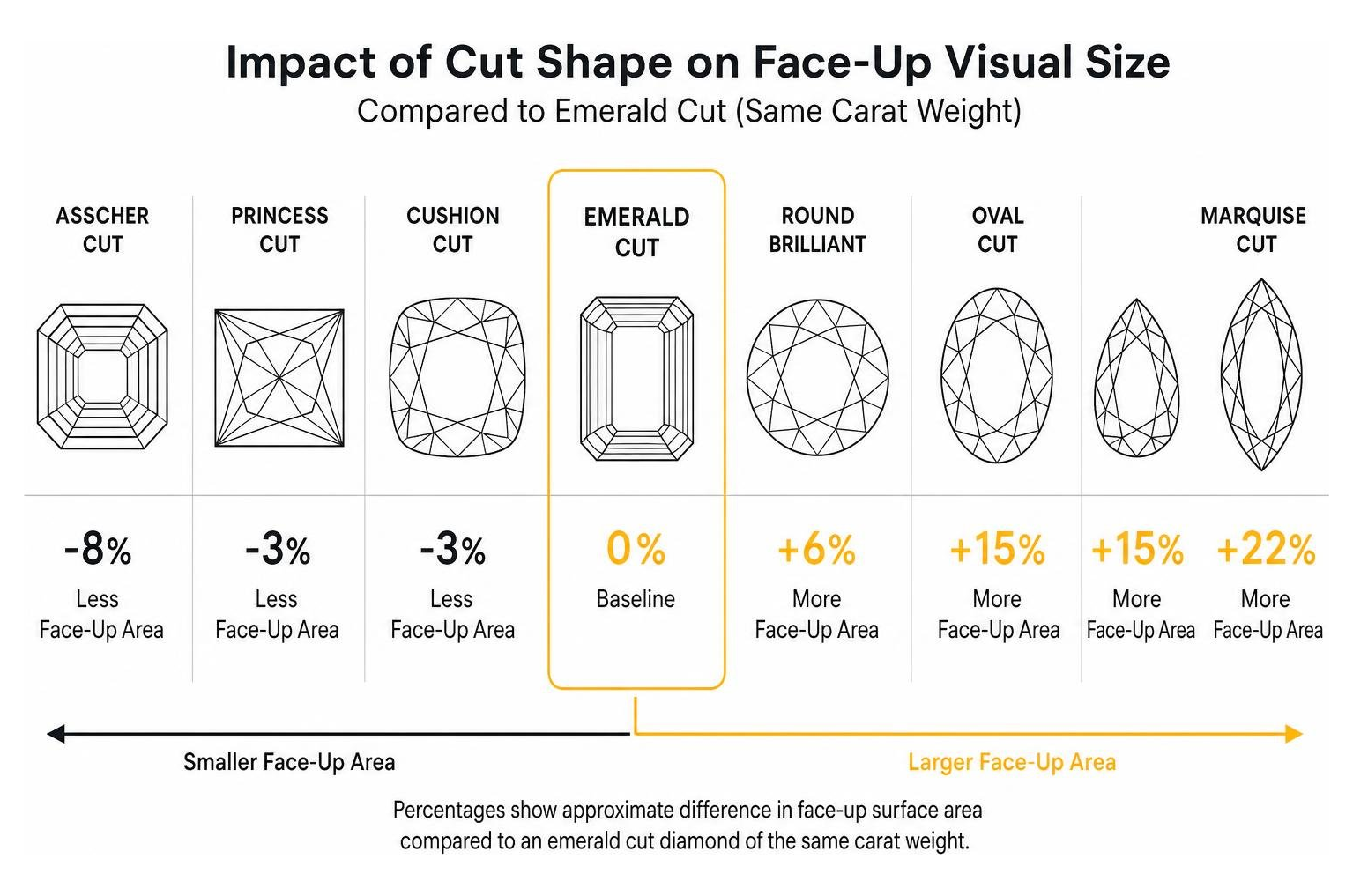
Face-up size varies by diamond shape, proportions, and cut depth, even when carat weights are identical. Emerald cuts have an elongated rectangular outline, while round, oval, pear, and marquise diamonds distribute their visible surface area differently. Rather than relying on a fixed percentage comparison, compare each diamond's length and width in millimeters to understand how much coverage it will provide.
Read our expert blog for more information about the different diamond shapes.
Key Cut Proportions That Affect Visual Emerald Cut Carat Sizes
Two emerald cut diamonds with identical carat weights on a lab report can look completely different on a hand. The secret lies in their cut proportions: length-to-width ratio, table percentage, and depth percentage.
Ideal Length-to-Width Ratios for Emerald Cut Carat Sizes
The length-to-width (L/W) ratio determines the overall outline and personality of an emerald cut. Calculate this ratio by dividing the diamond's length in millimeters by its width.
- Squarer Profile (1.25 – 1.34 Ratio): These stones offer a wider, robust appearance. They bridge the aesthetic gap between an Asscher cut and a classic rectangular emerald cut.
- Classic Rectangle (1.35–1.50 Ratio): This range creates the elongated rectangular shape commonly associated with emerald-cut diamonds. A ratio around 1.40 offers a balanced rectangular appearance, though the best choice depends on your preferred shape.
- Elongated Profile (1.51 – 1.65 Ratio): Highly elongated emerald cuts create a striking, modern look. They visually lengthen shorter fingers, though care must be taken to ensure the stone does not look too narrow.
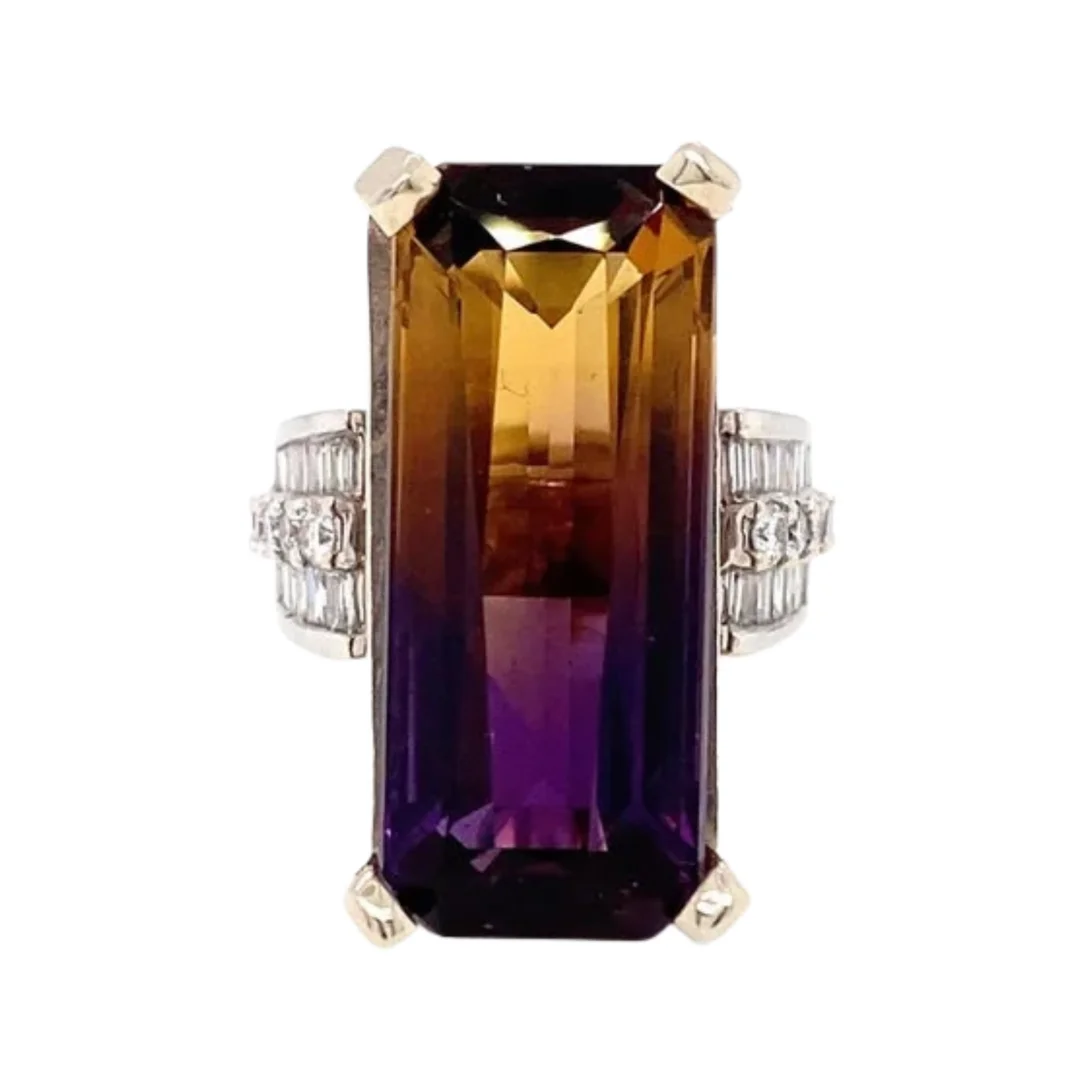
Table and Depth Percentages to Avoid Hidden Weight
When a diamond cutter shapes an emerald cut, their goal is to maximize brilliance while preserving carat weight. However, improper cut depth disrupts light reflection:
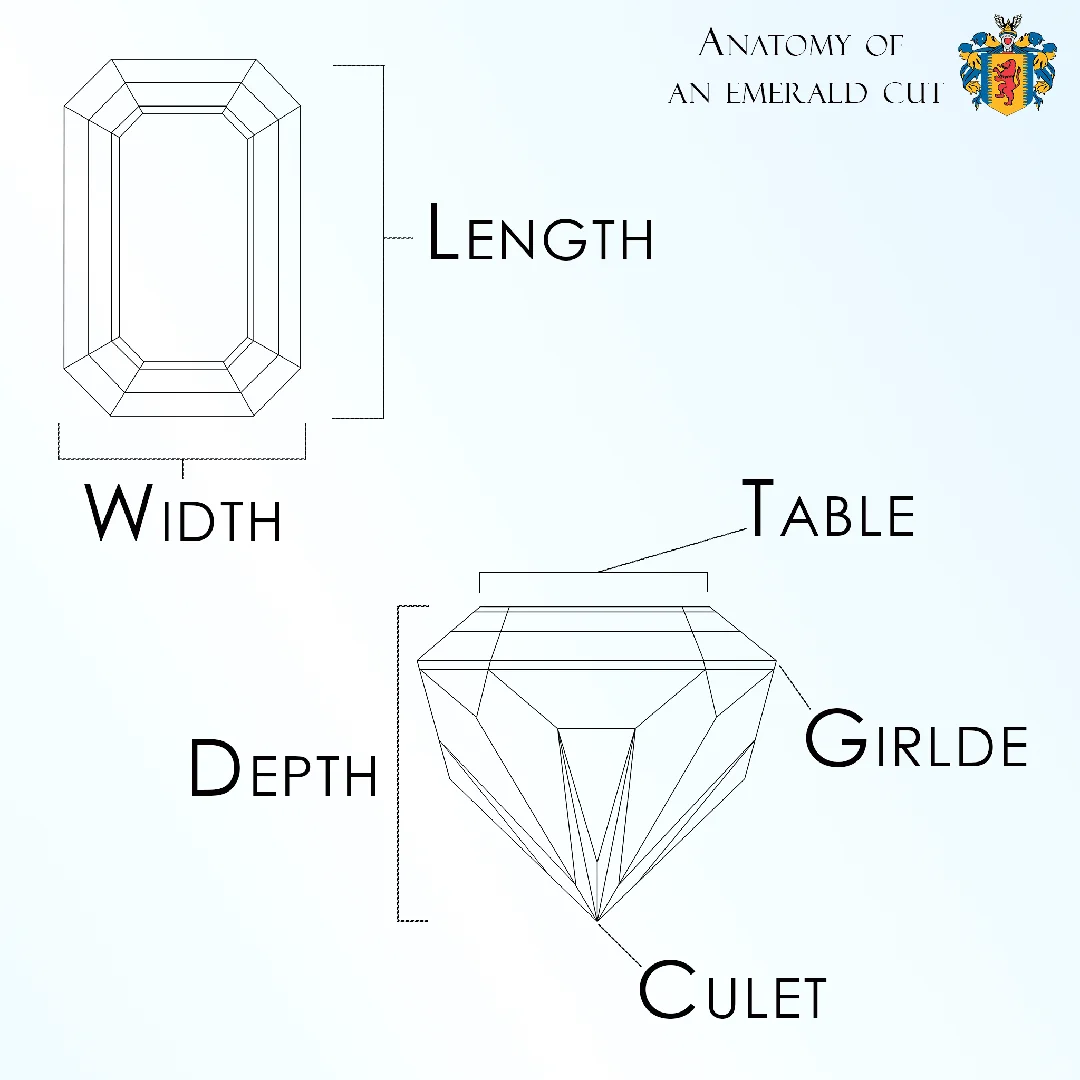
- Depth: A diamond's depth affects how much of its carat weight is visible from above. Two diamonds with the same carat weight can have different face-up dimensions, so compare their measurements in millimeters.
- Table: The table is the flat surface on top of the diamond. Its proportions affect the diamond's appearance, but no single percentage guarantees good cut quality.
- Symmetry and Girdle: Look for a balanced, symmetrical appearance. The girdle is the narrow edge around the diamond; an extremely thin girdle can leave the corners more vulnerable to chipping.
Essential Quality Factors for Step-Cut Emerald Diamonds
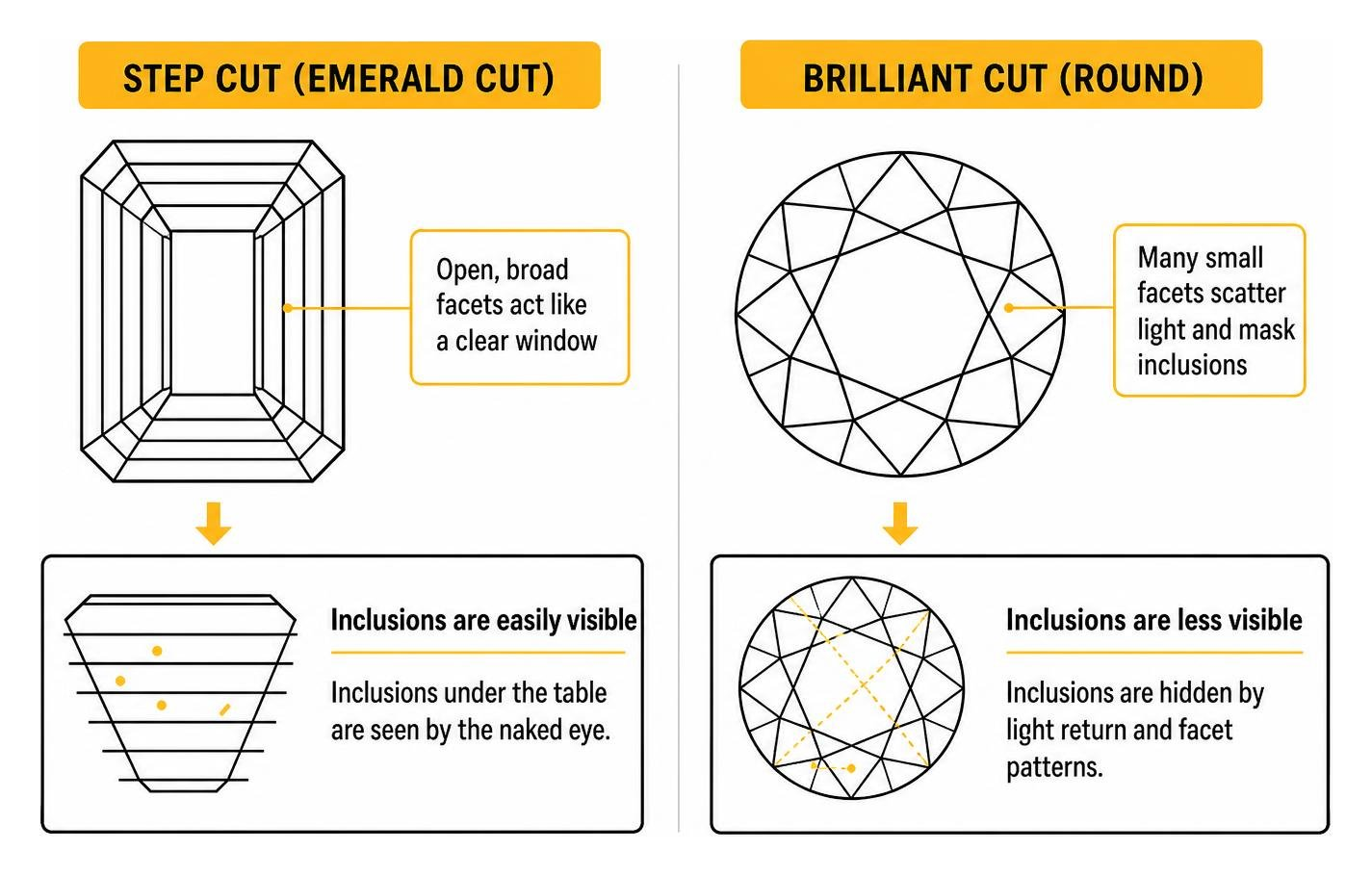
Unlike brilliant cut diamonds, whose overlapping triangular facets act like tiny prisms that scatter light and mask internal imperfections, an emerald cut features open, flat step facets. This broad, clear window makes quality parameters far more transparent.
Recommended Clarity and Color Grades
Because step cuts act like clear viewing panes, setting clarity and color priorities is crucial when shopping for emerald cut carat sizes:
-
Clarity: Emerald cuts have broad, open facets that can make inclusions more noticeable than they are in some brilliant-cut diamonds. VS2 or higher can be a useful starting point, but some SI1 diamonds may also appear eye-clean. Inspect the individual stone, especially around the center of the table, before deciding which clarity grade offers the best value.
-
Color: Emerald cuts can show body color more noticeably than brilliant cuts. Diamonds in platinum or white gold may benefit from higher color grades, while yellow or rose gold can complement warmer tones. Compare individual diamonds to decide which color grade offers the appearance you prefer at your budget.
- Certification: Look for a grading report from a reputable independent gemological laboratory, such as GIA (Gemological Institute of America) or IGI (International Gemological Institute). The report documents the diamond's assessed characteristics, including clarity and color.
Learn more about diamonds on our diamond education page.
Settings, Finger Proportions, and Smart Buying Strategies
The choice of setting and ring style plays a massive role in how big your diamond looks on your hand. Smart setting choices can make smaller emerald cut carat sizes present much larger without increasing your diamond budget.
Setting Styles: Halos, Solitaires, and Slim Bands
- Halo Settings: A halo of smaller diamonds can make the center stone appear larger by extending the overall outline of the ring. The visual effect depends on the halo's size and design, as well as the center diamond's dimensions.
- Classic Solitaires: Mounting an emerald cut in a clean setting emphasizes the architectural lines of the stone.
- Slim Bands: Pair your center stone with a thin band (1.5 mm to 1.8 mm width). A delicate band creates a visual contrast that makes the center diamond appear larger.
- Three-Stone Rings: Flanking an emerald cut center diamond with side stones—such as trapezoids, tapered baguettes, or small side emerald cuts—creates seamless horizontal coverage across the width of the finger.
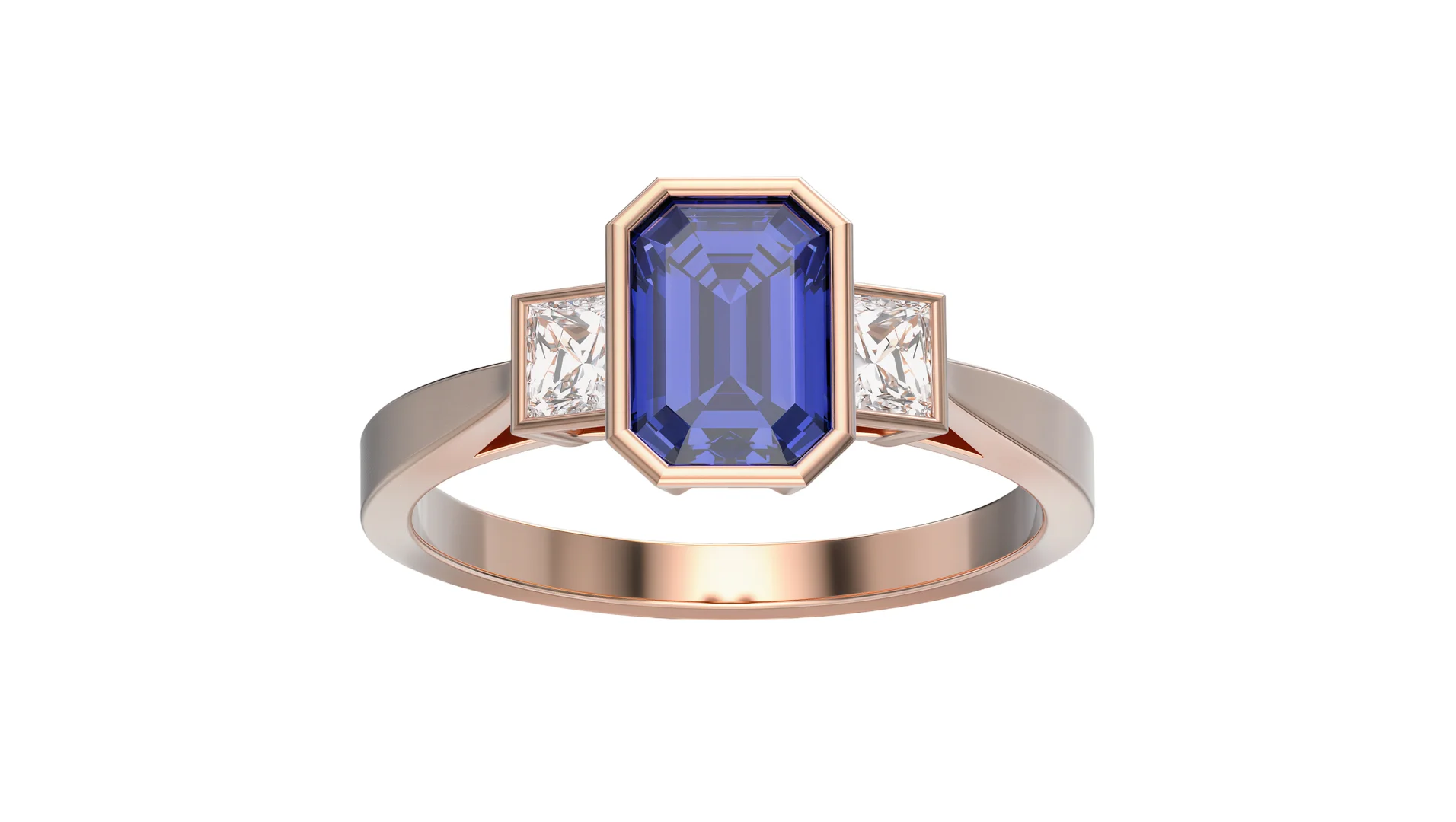
Learn more about ring settings in our expert blog Understanding the Different Styles of Engagement Ring Settings.
Popular Carat Ranges and Smart Budget Optimization
Many shoppers consider emerald-cut diamonds in the 1.25- to 1.75-carat range, but the right size depends on personal preference, finger proportions, and budget.
To stretch your budget when selecting emerald cut carat sizes, consider these strategies:
- Buy Below Carat Milestones: Diamond pricing spikes at round weight thresholds (e.g., 1.00 ct, 1.50 ct, 2.00 ct). Selecting a 0.90 to 0.95 carat or 1.40 to 1.45 carat emerald cut yields substantial savings while maintaining nearly identical millimeter dimensions.
- Focus on Dimensions over Weight: Compare length and width in millimeters, not just carat weight. A lighter diamond may have a similar face-up size to a heavier stone, depending on their proportions.
- Consider Lab-Grown Alternatives: If maximizing carat weight within a fixed budget is your primary goal, lab-grown emerald cut diamonds offer identical chemical, physical, and optical characteristics at a fraction of the cost of mined stones.
- Match Proportions to Hand Size: For slender fingers (ring sizes 3.0 to 5.5), a 1.00 to 1.25 carat stone provides significant coverage. For larger hand sizes (ring sizes 7.0 and up), an elongated length-to-width ratio (1.45 to 1.55) helps elongate the overall hand profile.
Frequently Asked Questions About Emerald Cut Carat Sizes
What millimeter size is a 1 carat emerald cut diamond?
A well-proportioned 1 carat emerald cut diamond typically measures approximately 6.7 mm in length by 4.8 mm in width at a classic 1.40 length-to-width ratio. Depending on cut depth and table dimensions, individual 1 carat stones may vary slightly from roughly 6.5 x 4.7 mm up to 7.0 x 5.0 mm.
Do emerald cut diamonds look bigger or smaller than round diamonds?
Emerald-cut and round diamonds can have different face-up dimensions at the same carat weight. Emerald cuts have an elongated rectangular shape, while round diamonds have a circular outline. To compare their visible size, check each diamond's length and width in millimeters and consider how its shape will look on your finger.
What is the best length-to-width ratio for an emerald cut diamond?
The classic, widely preferred length-to-width ratio for an emerald cut ranges between 1.35 and 1.50. A ratio of 1.40 offers the classic rectangular silhouette. Buyers seeking a squarer shape prefer ratios between 1.25 and 1.34, while those looking for an elongated look prefer ratios from 1.50 to 1.65.
Conclusion
Choosing an emerald-cut diamond means looking beyond carat weight. Compare face-up measurements, length-to-width ratio, clarity, and the diamond's overall appearance to find a stone that suits your preferences and budget. Because proportions and light performance vary between individual diamonds, reviewing the specific stone is more useful than relying on a single measurement or target percentage.
At Nelson Coleman Jewelers, our sixth-generation family expertise helps you compare natural and lab-grown diamonds, understand their characteristics, and choose a stone that fits your priorities. Whether you're selecting a diamond for a custom engagement ring or pairing it with a vintage setting, our team can guide you through the options.
Shop Emerald-Cut Jewelry at Nelson Coleman Jewelers


