

4 Prong Ring Mounts: Balancing Security and Sparkle for Your Stone
The Secret to Maximum Sparkle: What a 4 Prong Ring Mount Does Differently
A 4 prong ring mount is one of the most popular settings for engagement rings — and for good reason. Here's a quick summary of what you need to know:
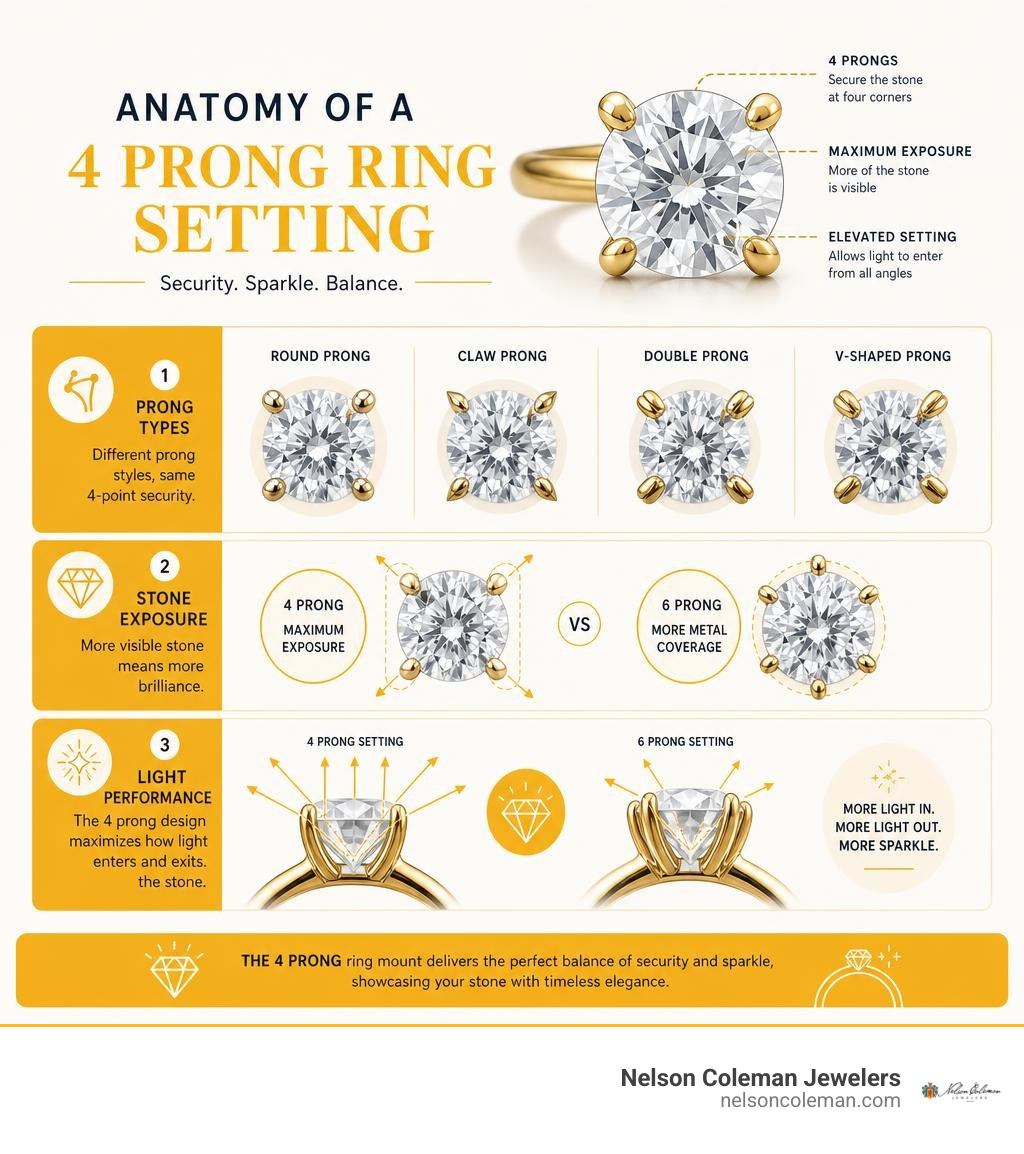
- What it is: A ring setting that holds a center stone in place using four metal prongs, leaving the majority of the gemstone's surface exposed.
- Why it matters: Fewer prongs mean more light enters and exits the stone, boosting brilliance and making the diamond appear larger.
- Best for: Round, cushion, oval, and princess cut diamonds — especially stones where you want maximum visual impact.
- Key trade-off: More sparkle and stone exposure, but slightly less coverage than a 6-prong setting.
- Common metals: Sterling silver, 10k gold, 14k gold, 18k gold, and platinum.
- Prong styles available: Round, claw, double, and V-shaped prongs.
Choosing the right setting is one of the biggest decisions you'll make when designing an engagement ring. The 4-prong mount sits right at the intersection of security and brilliance — it holds your stone firmly while letting as much light as possible do its job. But it's not a one-size-fits-all solution. The prong style, metal, stone shape, and customization options all affect how the finished ring looks and wears over time.
At Nelson Coleman Jewelers, we've been helping families find and design meaningful rings for over 165 years as a sixth-generation, family-owned jeweler — including countless custom 4 prong ring mount designs built to last a lifetime. In the sections below, we'll walk you through everything you need to evaluate this setting with confidence.
Understanding the Classic 4 Prong Ring Mount Setting
To understand why the 4 prong ring mount remains a favorite in July 2026, we have to look at how it works. A prong is a tiny metal claw or wire that extends from the basket of the ring to grip the gemstone's girdle (its widest point). By using exactly four of these prongs, typically positioned at the "corners" (northeast, northwest, southeast, and southwest) of the stone, the mount creates a minimalist frame.
This minimal metal coverage is the key to the setting's superior light performance. Gemstones, particularly diamonds, rely on light entering through the top and sides, bouncing off the internal facets, and reflecting back to your eye. The more metal that covers the stone, the less light can get in.
By keeping the sides of the stone largely unobstructed, a 4-prong mount maximizes brilliance, fire, and scintillation. It also creates a visual illusion: because there is less metal outlining the perimeter, the boundaries of the stone blend seamlessly into the light, often making the diamond look larger than it actually is.
If you are trying to decide on the foundation of your ring, Understanding the Different Styles of Engagement Ring Settings is a great place to start exploring how this classic structure compares to other design options.
4-Prong vs. 6-Prong and Other Settings
When you begin shopping, the most common dilemma you will face is choosing between a 4-prong and a 6-prong mount. While both are excellent options, they offer distinct advantages depending on your lifestyle and aesthetic goals.
The Visual and Structural Differences
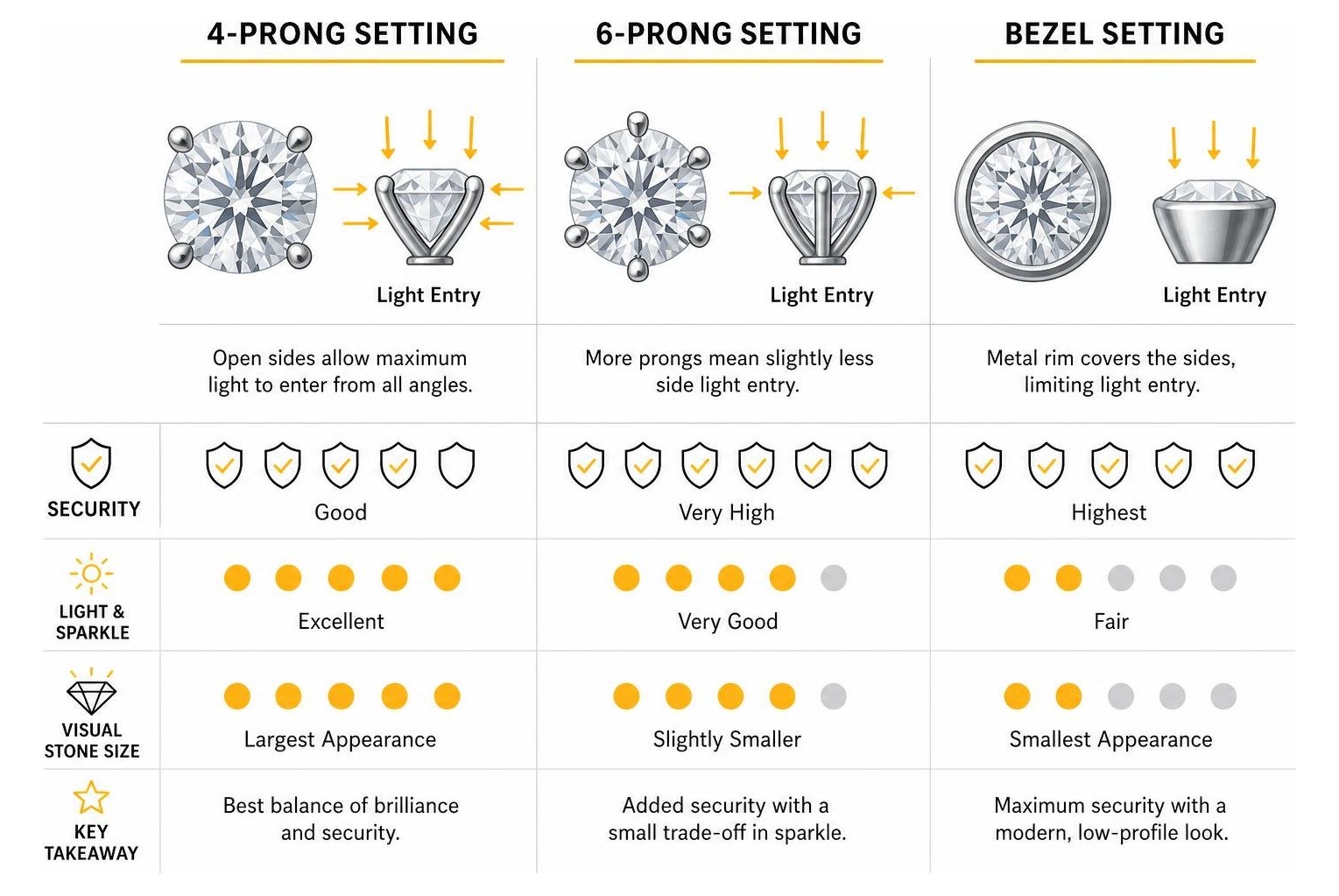
A 6-prong setting offers extra security because it places two additional metal claws on the stone. If one prong in a 6-prong ring is damaged, the remaining five can often hold the stone in place until you get it repaired. However, those extra prongs can make a smaller stone look "crowded" by metal, sometimes giving the diamond a slightly hexagonal shape rather than a true round look.
In contrast, the 4-prong mount keeps the stone's natural shape front and center. It is the ultimate choice for maximizing visual size and sparkle, though it does require a bit more mindfulness during daily wear.
Comparing Popular Settings
To help you decide which engagement ring to get, let's look at how the 4-prong mount stacks up against other popular styles:
| Setting Style | Security Level | Light & Sparkle | Visual Stone Size | Best Suited For |
|---|---|---|---|---|
| 4-Prong Mount | Moderate | Excellent (Maximum light) | Maximized (Looks larger) | Solitaires, classic designs, smaller to medium stones |
| 6-Prong Mount | High | Very Good | Standard | Larger round stones, active lifestyles |
| Bezel Setting | Extremely High | Moderate (Metal wraps stone) | Can make stone look smaller | Very active lifestyles, modern look |
| Cathedral Setting | High (Adds structural arches) | Excellent | Maximized | Elevated stones, elegant profiles |
| Pavé Band | Moderate (Small accent stones) | Excellent (All-over sparkle) | Enhances overall ring size | Adding side sparkle to a 4-prong center |
Gemstone Compatibility: Shapes, Sizes, and Cuts
Not all gemstones are shaped the same, and the way a 4 prong ring mount interacts with your stone depends heavily on its cut.
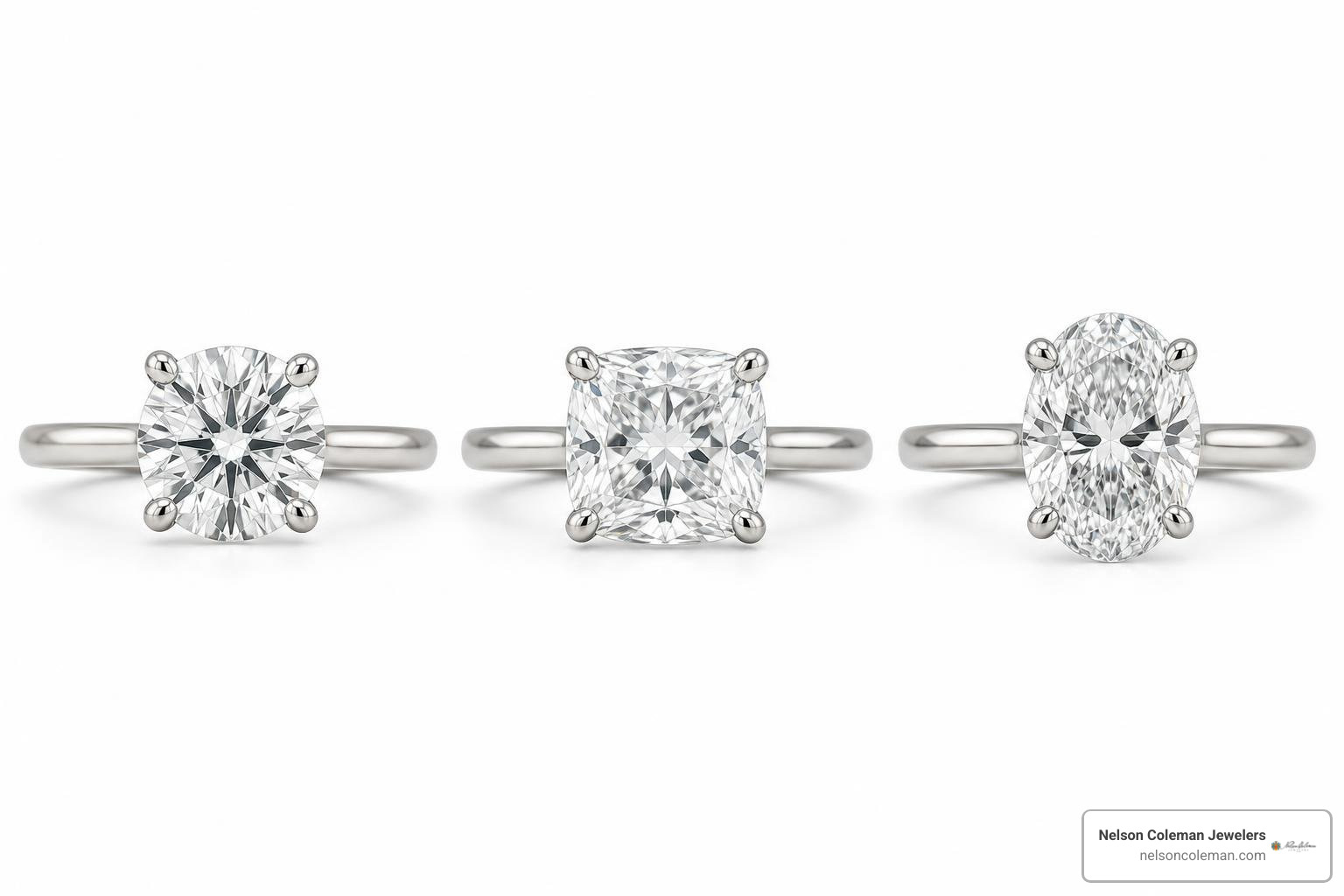
Here is how different shapes perform in a 4-prong setting:
- Round Brilliant: The absolute classic pairing. A 4-prong mount highlights the perfect symmetry of a round diamond while leaving its sides open to drink in the light.
- Cushion Cut: Cushion cuts have gently rounded corners and soft edges. A 4-prong mount sits perfectly at the four corners, accentuating the pillow-like shape without overwhelming its vintage charm.
- Oval Cut: Oval cuts benefit immensely from a 4-prong mount because fewer prongs prevent the stone from looking cluttered or losing its elongated, elegant silhouette.
- Princess Cut: For square cuts like the princess, a 4-prong setting is practically mandatory—but with a twist. It must use specialized V-shaped prongs to protect the sharp, delicate corners of the diamond from chipping.
To learn more about how different outlines reflect light, check out our guide on What Are the Different Diamond Shapes. To learn more about oval solitaire engagement rings, check out our blog Is a 4 Prong Oval Solitaire Safe? Everything You Need to Know.
Selecting the Perfect Stone for Your 4 Prong Ring Mount
When matching a stone to a mount, you must consider both carat weight and millimeter dimensions. While we often think of diamonds in terms of carat weight, jewelers measure mountings in millimeters.
For example, a standard 0.50-carat round brilliant diamond typically measures approximately 5.00mm in diameter. If you are selecting a pre-made mounting, you must ensure the millimeter size of the stone aligns perfectly with the basket of the mount to prevent a loose, unstable fit.
Because a 4-prong setting leaves more of the stone's girdle exposed, it is also important to understand the physical limits of your gemstone. While diamonds are the hardest natural substance on Earth, they are not completely indestructible. If you've ever wondered Can Diamonds Break, the answer is yes—they can chip or fracture if struck hard enough at a vulnerable angle. Protecting those edges with properly fitted prongs is key to keeping your stone safe.
Materials, Durability, and the Setting Process
The metal you choose for your 4 prong ring mount is just as important as the design itself. The prongs are the only things standing between your precious gemstone and the rest of the world, so they need to be made of sturdy stuff.
How Metal Choice Affects Your 4 Prong Ring Mount
Different metals offer unique benefits in terms of durability, color, and cost:
- Platinum: The gold standard for security. Platinum is incredibly dense and durable. Unlike gold, which wears away slightly when scratched, platinum merely displaces (a process called "patina"). This makes platinum prongs highly resistant to breaking or wearing down over time.
- 18k and 14k White Gold: A popular, bright white alternative to platinum. It is highly durable and holds stones very securely, though white gold prongs will require occasional rhodium plating to maintain their brilliant white finish.
- Yellow and Rose Gold (14k or 18k): These metals add a warm, romantic glow to a ring. Many buyers choose to pair a yellow gold band with platinum prongs to keep the prongs strong and invisible against a white diamond.
- Sterling Silver: While beautiful and highly affordable for dress rings, sterling silver is a softer metal. It is excellent for occasional wear but is generally not recommended for daily-wear engagement rings.
When buying any precious metal mount, always look for official hallmarking (such as "925" for sterling silver, "14K" or "585" for 14-karat gold, and "PLAT" for platinum) to verify the purity and authenticity of the metal.
The Role of Precision Mountings in Professional Jewelry Making
For independent jewelers and DIY enthusiasts, pre-manufactured mountings streamline the creation of high-quality jewelry.
One of the most helpful innovations in modern jewelry making is the pre-notched prong. Normally, a bench jeweler has to manually cut small grooves (notches) into each prong using a specialized burr before setting the stone. This requires incredible precision to ensure the stone sits level. A pre-notched mounting comes with these grooves already precisely cut into the metal.
Additionally, choosing a ring that features seamless casting (cast as a single piece of metal without solder joints) ensures there are no weak points. This makes the ring much more durable over years of wear and significantly easier to resize down the road.
Customization Options and Prong Styles
Choosing a 4 prong ring mount doesn't mean you are limited to a plain, simple look. In fact, the simplicity of the 4-prong layout makes it the perfect canvas for custom upgrades.
Choosing Your Prong Style
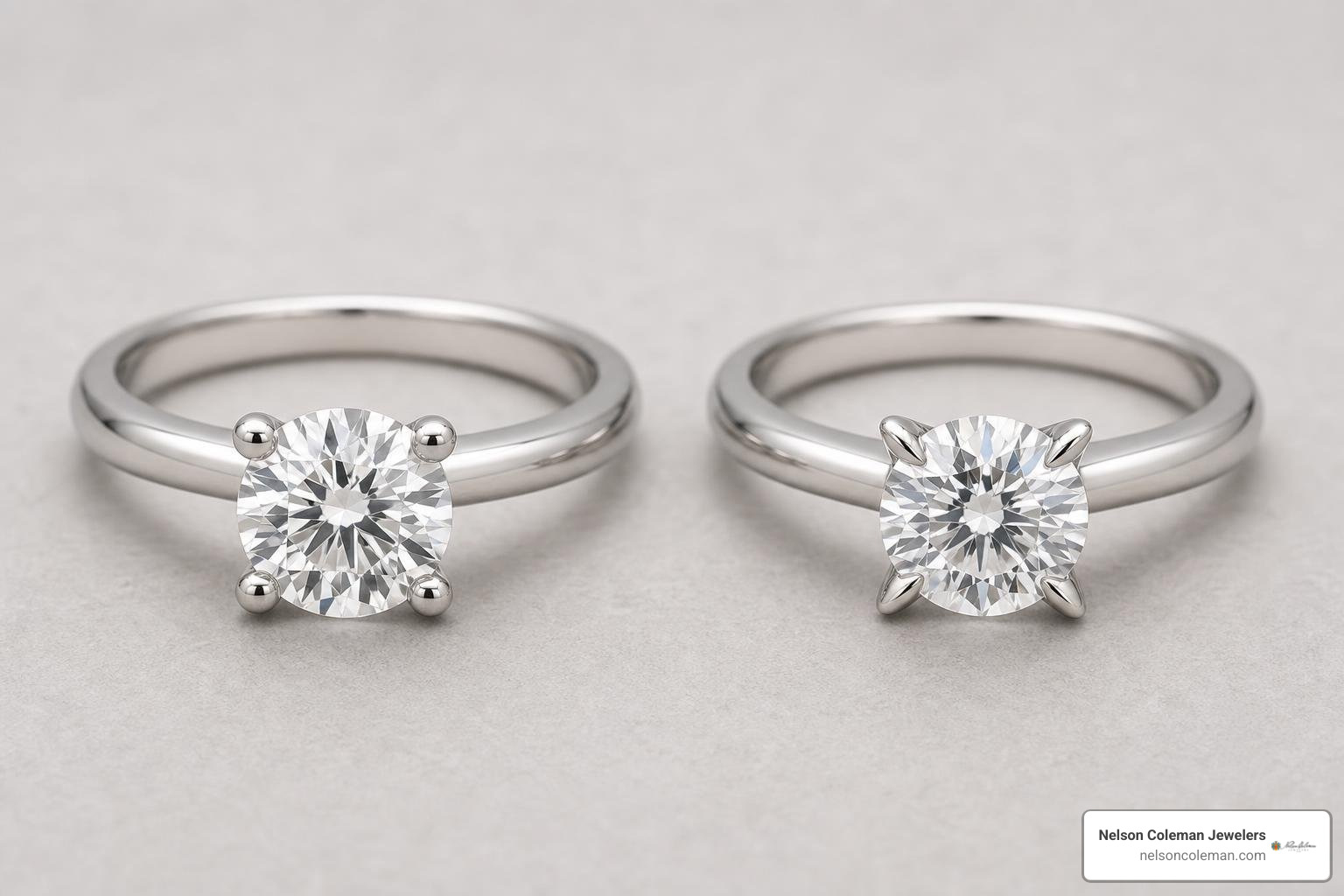
The shape of the prongs themselves can completely change the vibe of your ring:
- Round Prongs: The traditional standard. These look like tiny, subtle beads holding the stone.
- Claw Prongs: These taper to a fine, delicate point over the edge of the stone. They look modern, elegant, and minimize the visual footprint of the metal on the diamond.
- Double Prongs: This style groups two small, delicate prongs close together at each of the four corners. It offers the sleek silhouette of a 4-prong ring with the added security (and vintage charm) of eight contact points.
- V-Prongs: Flat, flush-fitting prongs that wrap around sharp corners to protect princess, pear, or marquise cut stones from catching and chipping.
Adding Extra Sparkle
If you want to dress up a classic solitaire, you can incorporate modern design elements that add brilliance without adding top prongs:
- Hidden Halos: A tiny collar of pavé diamonds wrapped around the base of the prongs, visible only from the side profile.
- Pavé Bridge or Pavé Donut: Adding tiny diamonds along the metal bridge directly beneath the center stone for a surprise sparkle from every angle.
- Cathedral Arches: Raising the shoulders of the band to meet the basket, adding structural support and elegant side-profile curves.
Ready to start brainstorming your own unique look? We invite you to read through Create a Custom Engagement Ring Your Complete Guide and How to Buy an Engagement Ring: Your Complete Guide to see how we bring these gorgeous details to life.
Frequently Asked Questions About 4 Prong Mounts
Is a 4 prong setting secure enough for daily wear?
Yes, absolutely! Millions of people wear 4-prong engagement rings every single day without issue. However, because you only have four points of contact holding the stone, prong maintenance is crucial. We recommend having your ring checked by a professional jeweler every six months to ensure the prongs haven't bent or worn down. If they do wear down over the years, a jeweler can perform a quick "retipping" service to restore the metal's strength.
Does a 4 prong mount make a diamond look bigger?
It certainly does. Did you know that 93 people searched for '4 prong diamond ring' on Pinterest in just the last 3 days? A huge reason for this popularity is the visual illusion it creates. By covering less of the stone's perimeter with metal, more of the diamond is visible, which tricks the eye into seeing a larger, more brilliant gem.
How do I choose between claw prongs and round prongs?
It mostly comes down to personal style! Round prongs offer a soft, classic, and traditional look. Claw prongs (especially petite claw prongs) offer a sharper, modern, and high-fashion aesthetic that makes the prongs look almost invisible on the diamond. Claw prongs can occasionally catch on fine knits or lace if they aren't properly finished and polished, so make sure they are set flush by an experienced bench jeweler.
Conclusion
The classic 4 prong ring mount remains a premier choice for anyone looking to let their center stone truly shine. By striking the perfect balance between minimal metal coverage and reliable security, it ensures your diamond or gemstone takes center stage.
Whether you prefer the sleek look of modern claw prongs, the added security of double prongs, or the extra sparkle of a hidden halo, this versatile setting can be customized to match your exact vision.
At Nelson Coleman Jewelers, we combine expert custom design, master bench craftsmanship, and a warm, family-centered approach to help you build a ring you'll cherish forever. Best of all, when you design your ring with us at our locations in Towson, MD, Frederick, MD, Easton, MD, or Inwood, WV, you participate in our community-focused giving program—where we donate up to 10% of your purchase to a charity of your choice.
Stop by one of our showrooms in the Baltimore Metropolitan area, Maryland, or West Virginia today, or contact us online to start crafting your dream 4-prong ring!


