

The Truth About Average Ring Diameter and How to Find Yours
Why Average Ring Diameter Is the Number That Actually Matters
The average ring diameter is a useful reference when shopping for a ring, whether you're sizing yourself or buying a surprise gift. Here's a quick reference to common ring sizes:
| Who | Region | Common Size | Inner Diameter |
|---|---|---|---|
| Women | US / Canada | Size 6 | 16.5 mm |
| Women | UK | Size L½ | 16.5 mm |
| Men | US / Canada | Size 10 | 19.8 mm |
| Men | UK | Size U½ | 19.8 mm |
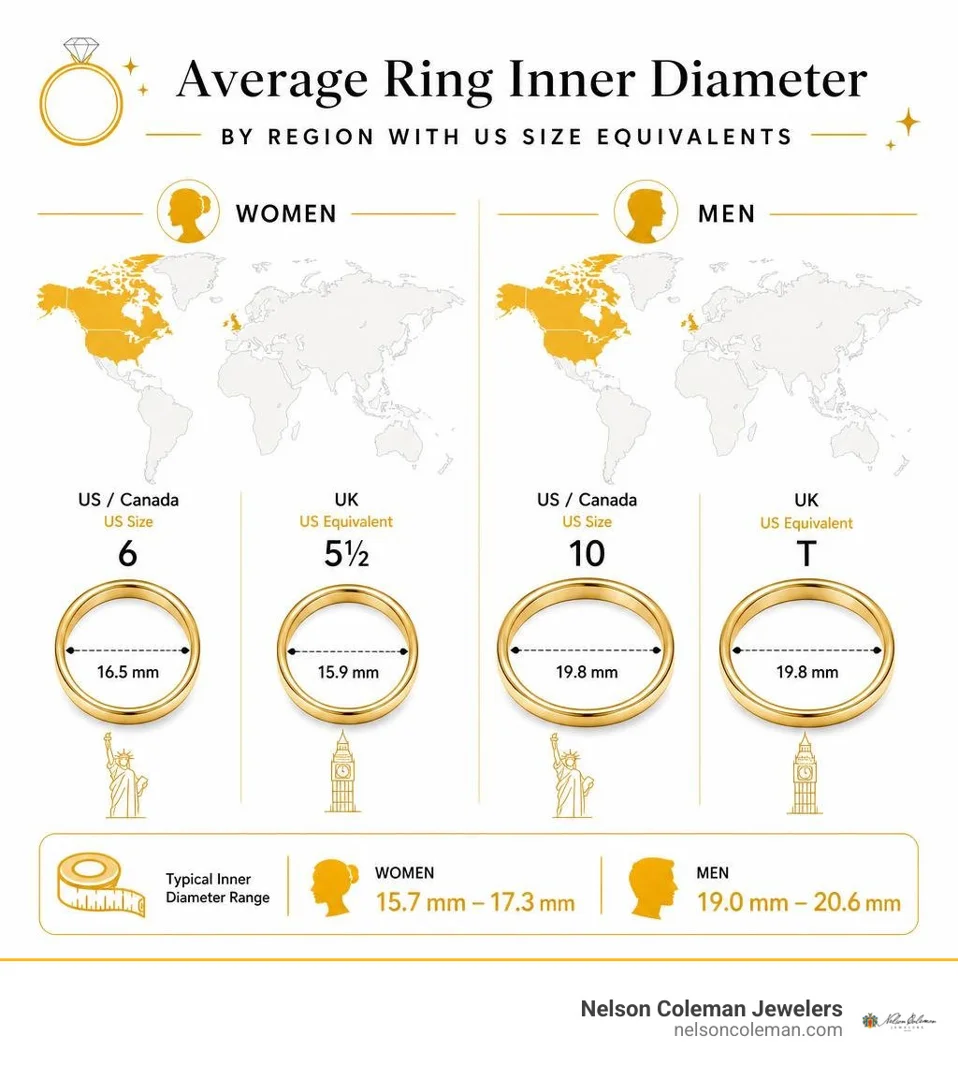
These measurements provide a starting point, but individual ring sizes vary. Our guide on how to determine ring size explains how to find the right fit, whether you're shopping for yourself or planning a surprise gift.
Getting the diameter wrong can mean a ring that won't slide on or one that slips off too easily. Finger size can also fluctuate with temperature and other conditions, so it's important to measure carefully.
This guide covers common ring diameter measurements, international size conversions, factors that affect fit, and how to measure an existing ring at home.
As a sixth-generation, family-owned jeweler with more than 165 years of experience, Nelson Coleman Jewelers combines generations of jewelry expertise with professional training and industry credentials. Our team includes GIA- and AGS-credentialed professionals, and we are a Jewelers of America member store. Whether you're choosing an engagement ring or a wedding band, accurate measurements are an important first step toward a comfortable fit.
Global Benchmarks: What Is the Average Ring Diameter for Men and Women?
When jewelers refer to ring size, they are either measuring the ring’s inner diameter or its inner circumference. Size labels vary by country, using numbers in North America, letters in the United Kingdom and Australia, or measurements based on internal circumference in some European sizing systems. Understanding these measurements makes it easier to compare ring sizes across different systems and find the corresponding size in millimeters.
In the United States and Canada, a commonly cited average women's ring size is 6, with an inner diameter of approximately 16.5 mm. For men, size 10 is often used as a general reference, with an inner diameter of approximately 19.8 mm. These figures reflect common jewelry-industry guidance rather than verified national averages. Individual ring sizes vary, however, so these averages are useful starting points rather than reliable estimates for a particular person.
In the US and Canadian sizing systems, each whole ring size represents an increase of approximately 0.81 mm in inner diameter. Half and quarter sizes allow for more precise adjustments. Other countries use different sizing systems, so comparing inner diameter and circumference measurements can help you identify the corresponding size.
The following chart shows approximate conversions between common US, UK, and European ring sizes, along with their corresponding inner diameters and circumferences:
| US / Canada Size | UK / AU Size | EU / ISO Standard Size | Internal Diameter (mm) | Internal Circumference (mm) |
|---|---|---|---|---|
| 3 | F | 44 | 14.1 | 44.3 |
| 4 | H½ | 47 | 14.9 | 46.8 |
| 5 | J½ | 49 | 15.7 | 49.3 |
| 6 | L½ | 52 | 16.5 | 51.9 |
| 6.5 | M½ | 53 | 16.9 | 53.1 |
| 7 | O | 54 | 17.3 | 54.4 |
| 8 | Q | 57 | 18.1 | 57.0 |
| 9 | S | 59 | 19.0 | 59.5 |
| 10 | U½ | 62 | 19.8 | 62.1 |
| 11 | W½ | 65 | 20.6 | 64.6 |
| 12 | Y | 67 | 21.4 | 67.2 |
| 13 | — | 70 | 22.2 | 69.7 |
Ring-size conversions are approximate, and charts can vary slightly between sizing systems. Use a conversion chart as a reference rather than a substitute for an accurate measurement.
If you're working with measurements in centimeters, our guide to converting centimeters to ring size explains how to use your measurements to find the corresponding ring size.
How Finger Selection and Hand Dominance Affect Ring Size
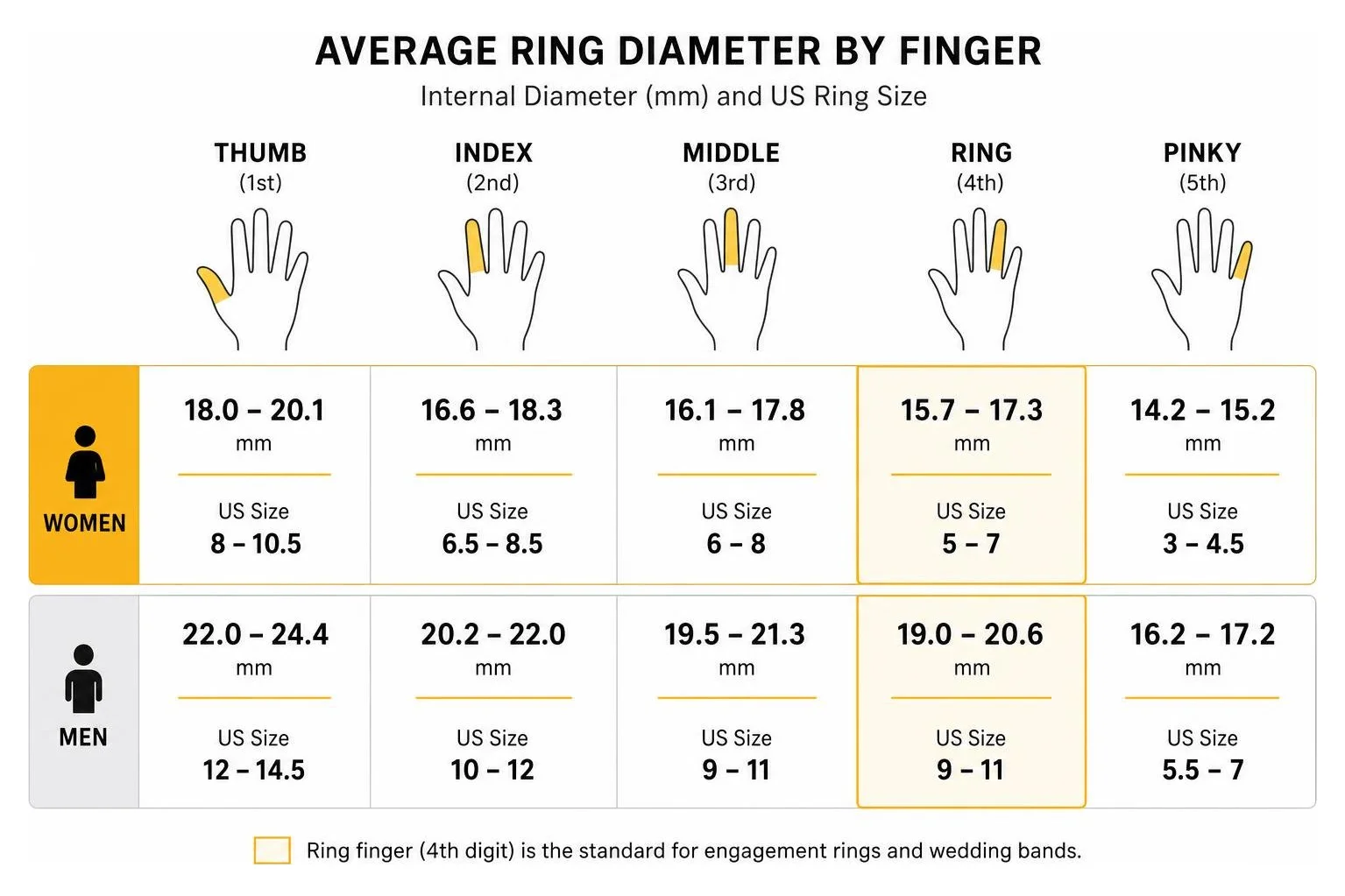
A common mistake when evaluating ring size is assuming that the same finger on both hands will have the same measurement. Hand and finger dimensions vary from person to person, and the dominant hand may be slightly larger than the non-dominant hand.
The ring finger is the most common choice for engagement rings and wedding bands, but the correct size depends on the specific finger and hand. If you're buying a ring for a different finger or hand, measure that exact finger whenever possible.
Anatomical and Environmental Factors Affecting Finger Size
Measuring your ring size is not a completely static calculation. Fingers can change slightly in size throughout the day and in response to temperature.
A ring that fits comfortably in a cold showroom may feel tighter in warm weather. Cold temperatures can make fingers smaller, while heat can cause temporary swelling. Hydration, activity, and other everyday factors can also affect how a ring fits.
For a more reliable measurement:
- Measure at a comfortable temperature. Avoid measuring when your hands are unusually cold or hot.
- Measure at a typical time of day. If possible, avoid measuring when your fingers are noticeably swollen.
- Check the fit over the knuckle. A ring needs to pass over the knuckle while still fitting securely at the base of the finger.
- Measure more than once. Repeat the measurement to check for consistency.
How Ring Design Alters Fit: Widths, Profiles, and Metals
When selecting a ring, measuring your bare finger is only part of the process. The ring's design, including its band width and interior profile, can also affect how it fits.
A narrow ring band, such as a classic 2 mm engagement ring shank, covers less of the finger than a wider band. A wide band, such as an 8 mm or 10 mm wedding band, covers more surface area and may feel tighter at the same ring size.
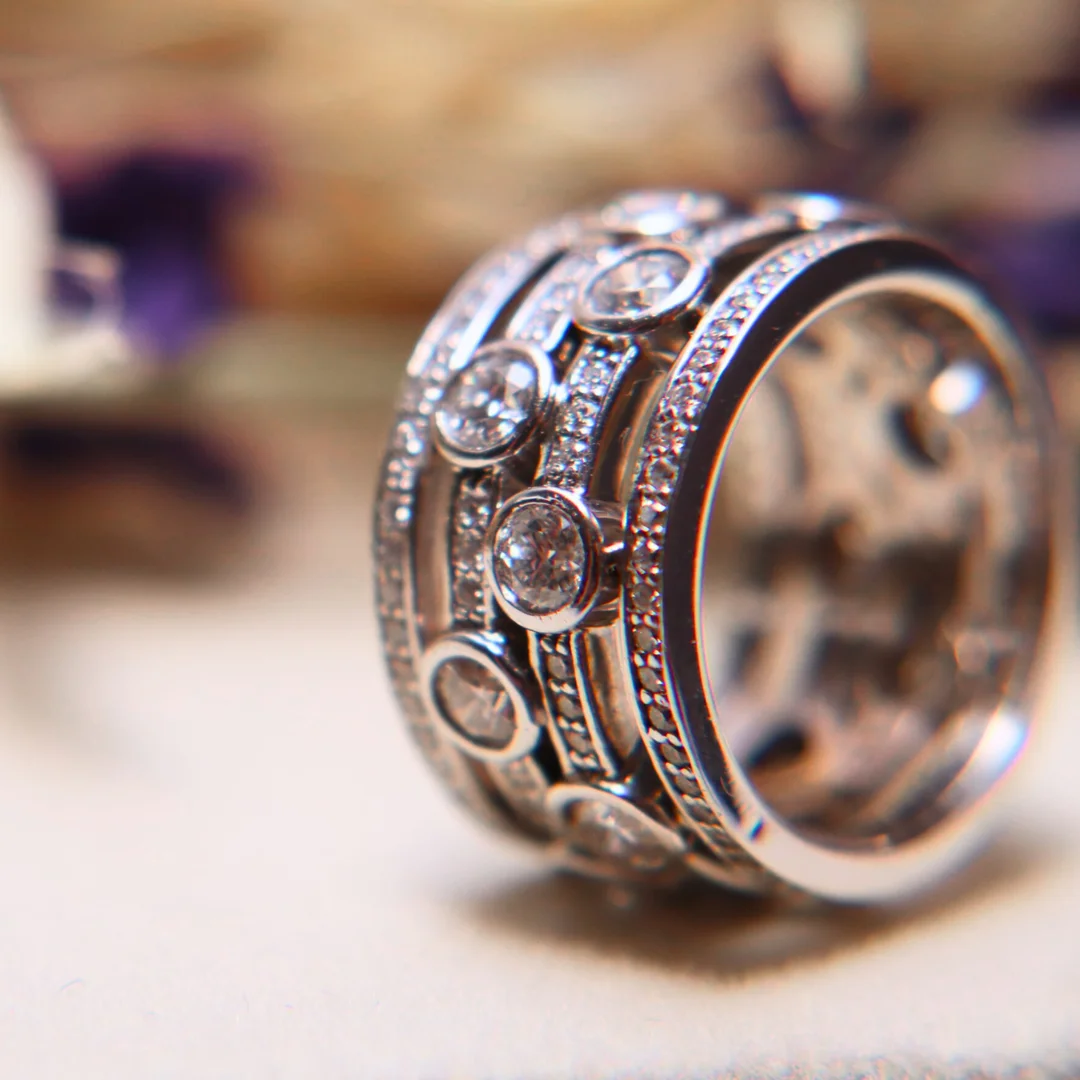
For this reason, wider bands sometimes require a slightly larger size than narrow bands. The adjustment depends on the individual ring and finger, so it's best to try on a band of a similar width or ask a jeweler to help determine the right fit.
The interior profile of the ring shank also affects comfort:
- Standard Fit: The inside surface of the band is relatively flat, creating more contact with the finger.
- Comfort Fit: The inside of the band has a rounded profile that can make the ring easier to slide over the knuckle. The difference in fit depends on the ring's design and width, so don't assume a comfort-fit ring automatically requires a smaller size.
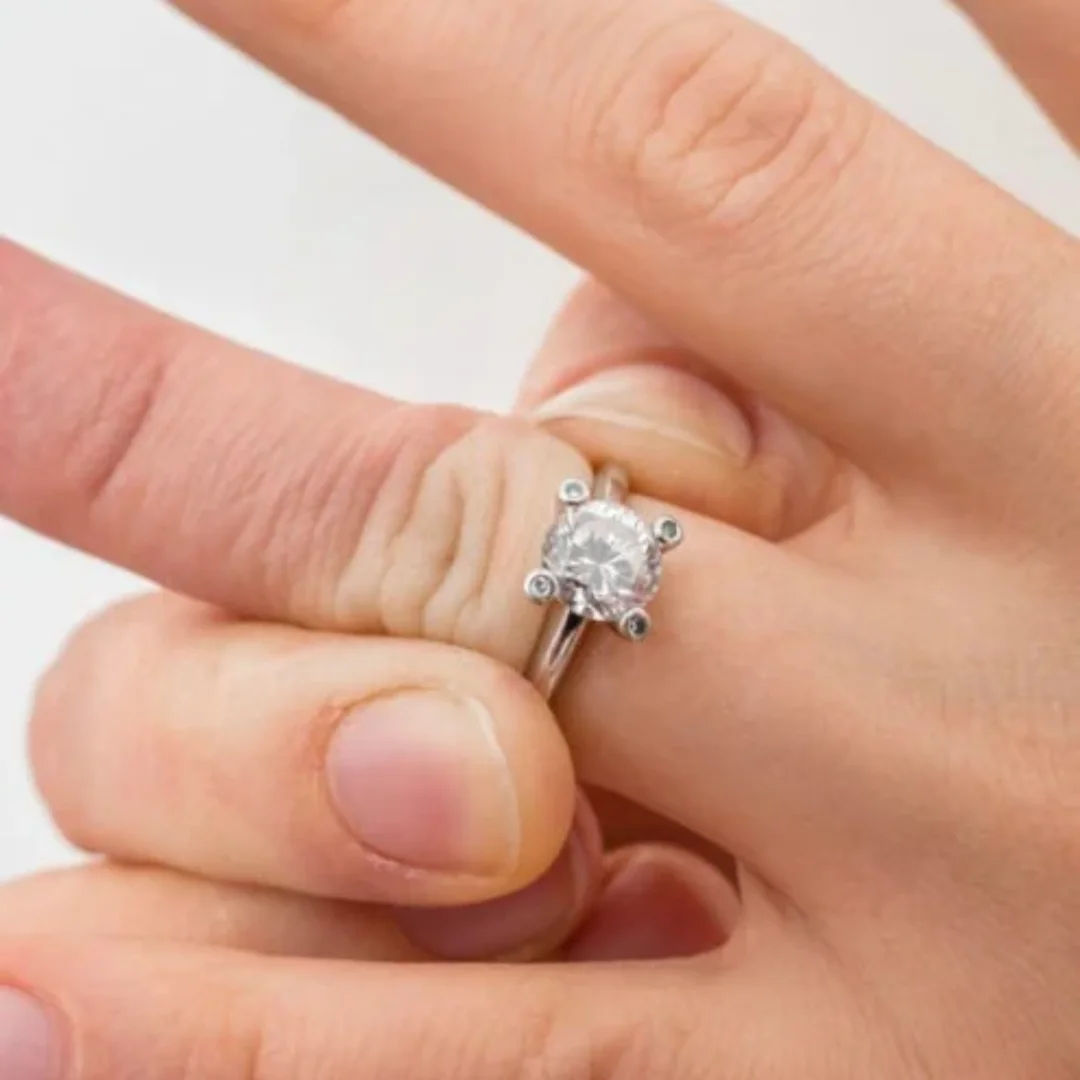
The balance of the ring's setting can influence how it sits on the hand, too. Top-heavy designs, such as large solitaire diamonds or halo settings, may turn sideways if the ring is too loose. A secure fit helps keep the setting in place during everyday wear.
Measuring Ring Diameter at Home vs. Professional Methods
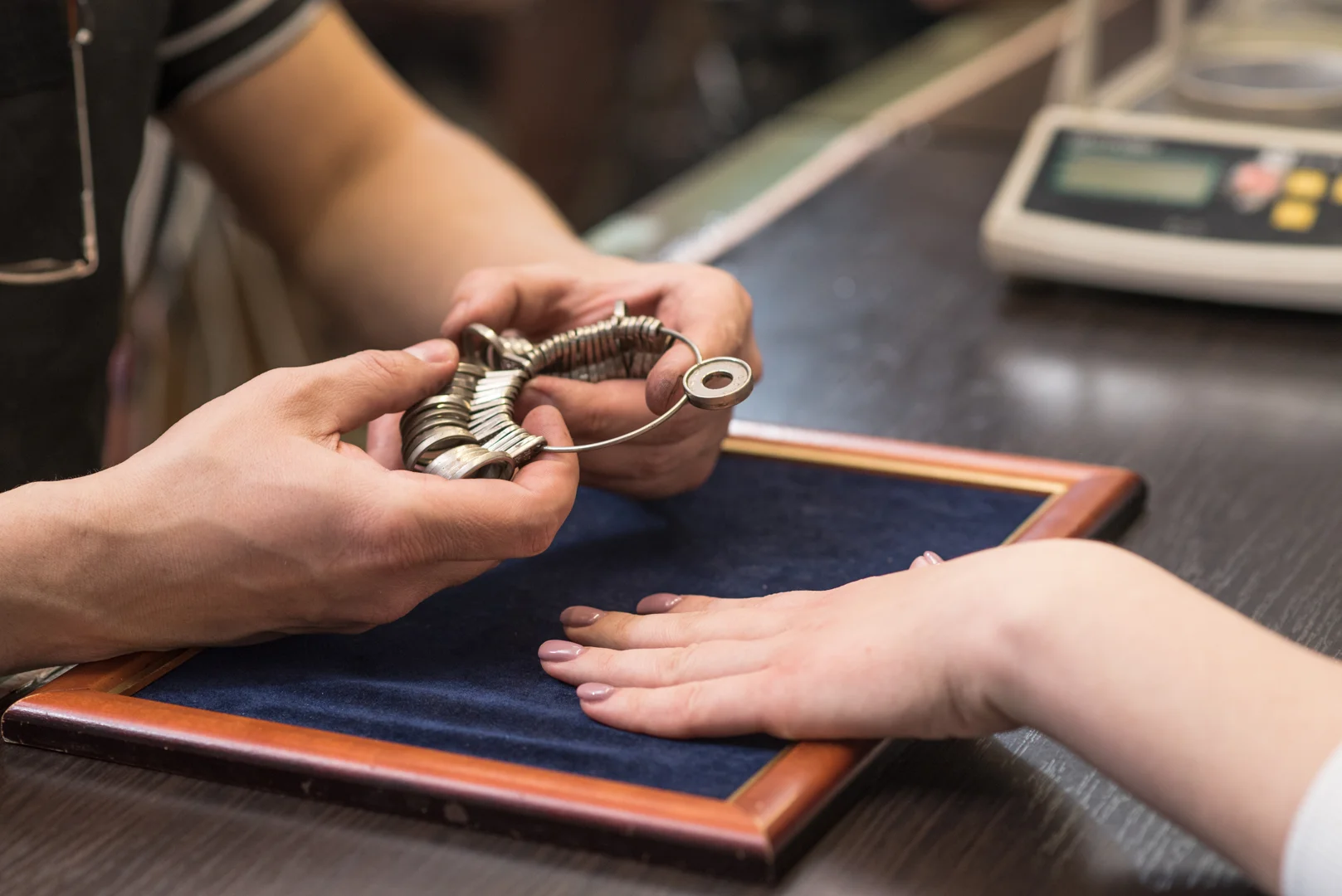
Determining your correct inner ring diameter requires careful measurement. Small errors can affect the fit, so take your time and check your results. For an accurate ring sizing, it is recommended to work with a qualified jeweler.
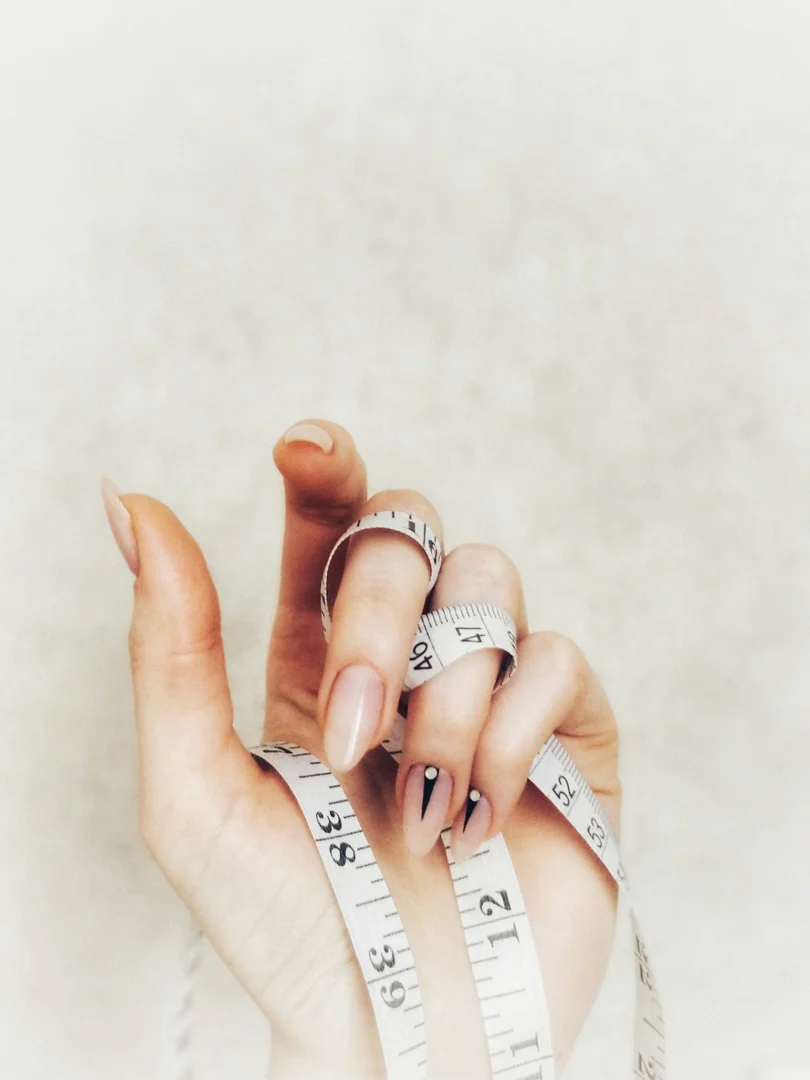
If you're measuring at home, two common methods can help:
- Measuring an existing ring: Choose a ring that fits the intended finger well. Lay it flat on a hard surface and use a ruler marked in millimeters to measure straight across the inside of the ring, from one inner edge to the opposite inner edge. Measure the internal diameter, not the outside of the band. Digital calipers can provide a more precise measurement.
- Measuring finger circumference: Wrap a non-stretching strip of paper around the base of the finger. Make sure it fits snugly but can still pass over the knuckle. Mark where the paper overlaps, then lay it flat and measure the length in millimeters. This gives you the finger's circumference, which can be compared with a ring-size chart.
If you know the inner diameter of a ring, you can estimate its internal circumference by multiplying the diameter by pi, approximately 3.14159.
For example, a ring with an inner diameter of 16.5 mm has an internal circumference of approximately 51.8 mm, because 16.5 x 3.14159 = 51.8.
For the most reliable result, visit a professional jeweler. Jewelers use sizing rings and specialized measuring tools to check the fit and account for differences in band width, profile, and finger shape. If you're determined to measure ring size at home, check out our in-depth guide that includes specific tips and tricks.
Antique rings may require additional care when measuring or adjusting their size. See our antique ring sizing guide for more information.
Frequently Asked Questions About Ring Diameter
What is the average ring diameter for women in the US?
US size 6, with an inner diameter of approximately 16.5 mm, is commonly cited as an average women's ring size. However, ring sizes vary, and this measurement should be treated as a reference rather than an estimate of any particular person's size.
How do you calculate ring circumference from inner diameter?
Multiply the internal diameter in millimeters by pi, approximately 3.14159.
Circumference = Internal Diameter × 3.14159
For example, a ring with an inner diameter of 16.5 mm has an internal circumference of approximately 51.8 mm.
Why can a wide ring band feel tighter?
A wide band covers more of the finger than a narrow band, which can make it feel tighter even when both rings have the same inner diameter. The amount of adjustment needed depends on the ring's width, profile, and the wearer's finger. Trying on a similar band or consulting a jeweler can help you find the right fit.
Conclusion
Finding your ideal ring diameter starts with accurate measurements. Average sizes and conversion charts provide useful reference points, but your individual finger and the ring's design determine the best fit.
At Nelson Coleman Jewelers, serving Towson, Frederick, and Easton, Maryland, and Inwood, West Virginia, our team can help you find a comfortable fit for an engagement ring, wedding band, or other piece of jewelry.


