

The Ultimate Guide to Custom Jewelry Options
What Is Custom Jewelry — and Why Does It Matter?
Custom jewelry is any piece designed and made specifically for one person — not pulled from a shelf, not mass-produced, not worn by thousands of others. Here's a fast overview of what that means in practice:
- What it is: A one-of-a-kind piece built around your design, materials, and personal meaning
- Who it's for: Anyone wanting something unique — from engagement rings to heirloom redesigns to personalized gifts
- How it works: You consult with a jeweler, choose your materials and design, and the piece is handcrafted to order
- How long it takes: Typically 4 to 8 weeks, sometimes longer if specialty gemstones need to be sourced
- What it costs: Varies widely based on metal, gemstones, and complexity — there's no fixed price
- Key difference from ready-made: Ready-made jewelry is pre-designed and mass-produced; custom jewelry is built from scratch around you
There's something deeply personal about wearing a piece no one else owns. Whether you're trying to capture a feeling, honor a memory, or mark a milestone, custom jewelry does something a store display case simply can't — it tells your story.
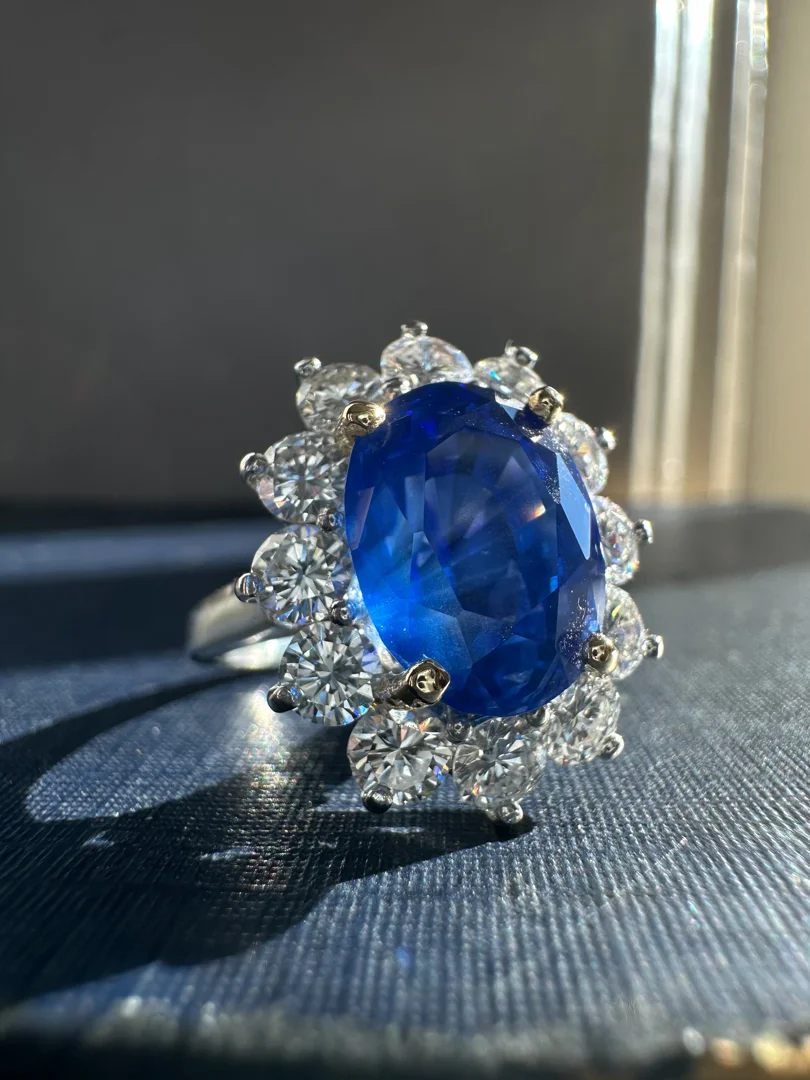
At Nelson Coleman Jewelers, we've been helping families across Baltimore, Frederick, and beyond create meaningful custom jewelry since 1856 as a sixth-generation family-owned store. Explore our custom jewelry design services to learn how you can turn your ideas into a piece that's uniquely yours.
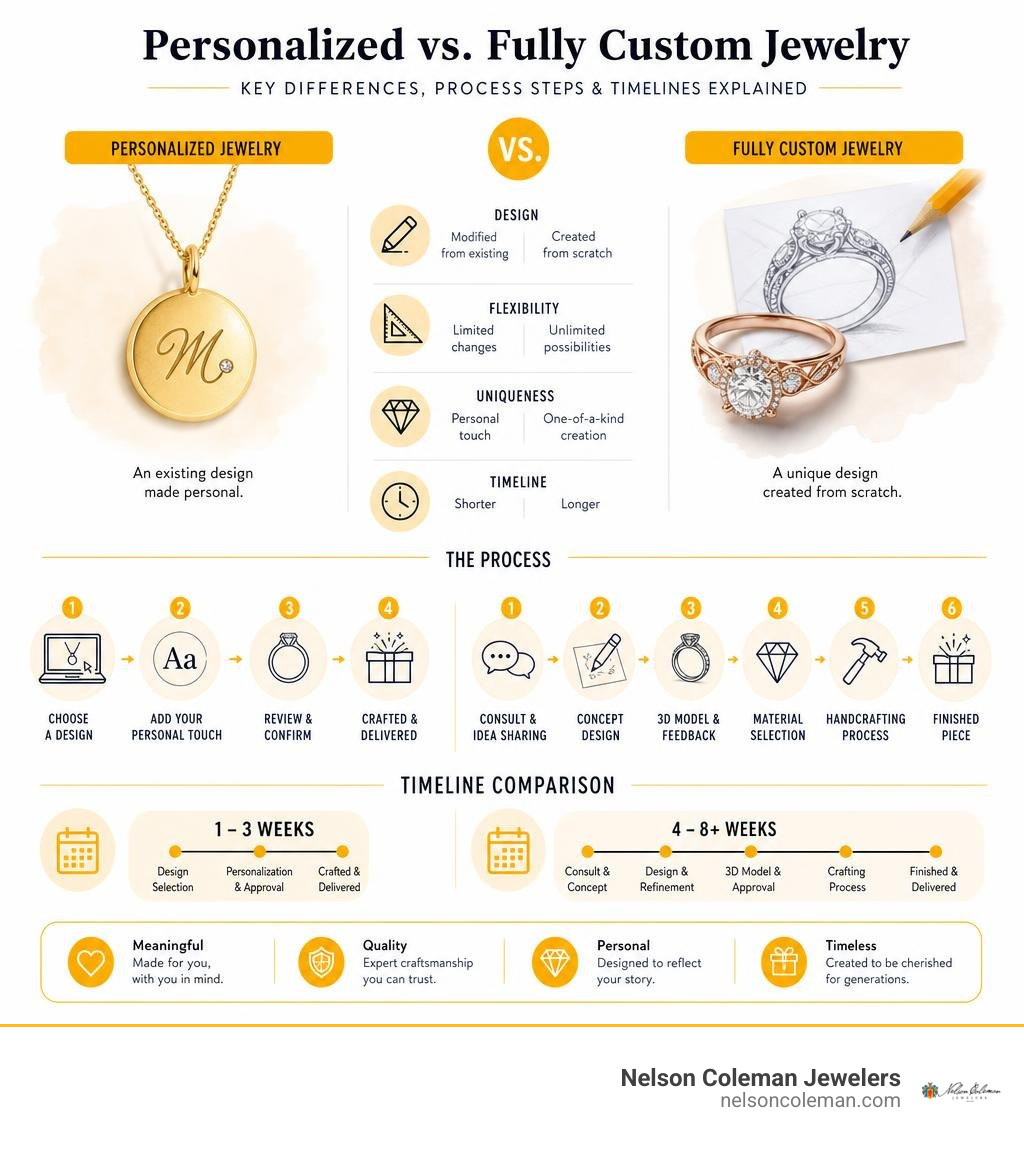
What is Custom Jewelry and How Does It Differ From Ready-Made?
When you walk into a traditional jewelry store, most of what you see in the glass cases is "ready-made" or "production" jewelry. These pieces are manufactured in large quantities, often using standardized molds, and distributed to retailers worldwide.
To understand your options, it helps to distinguish between the levels of customization available today:
- Mass Customization (Personalized Jewelry): This is where you take a pre-existing manufactured piece and add a personal touch. Examples include engraving a name on a pre-fabricated bar necklace, choosing a birthstone to drop into a standard prong setting, or ordering a machine-stamped initial disc. While highly sentimental, the physical structure of the piece is not unique.
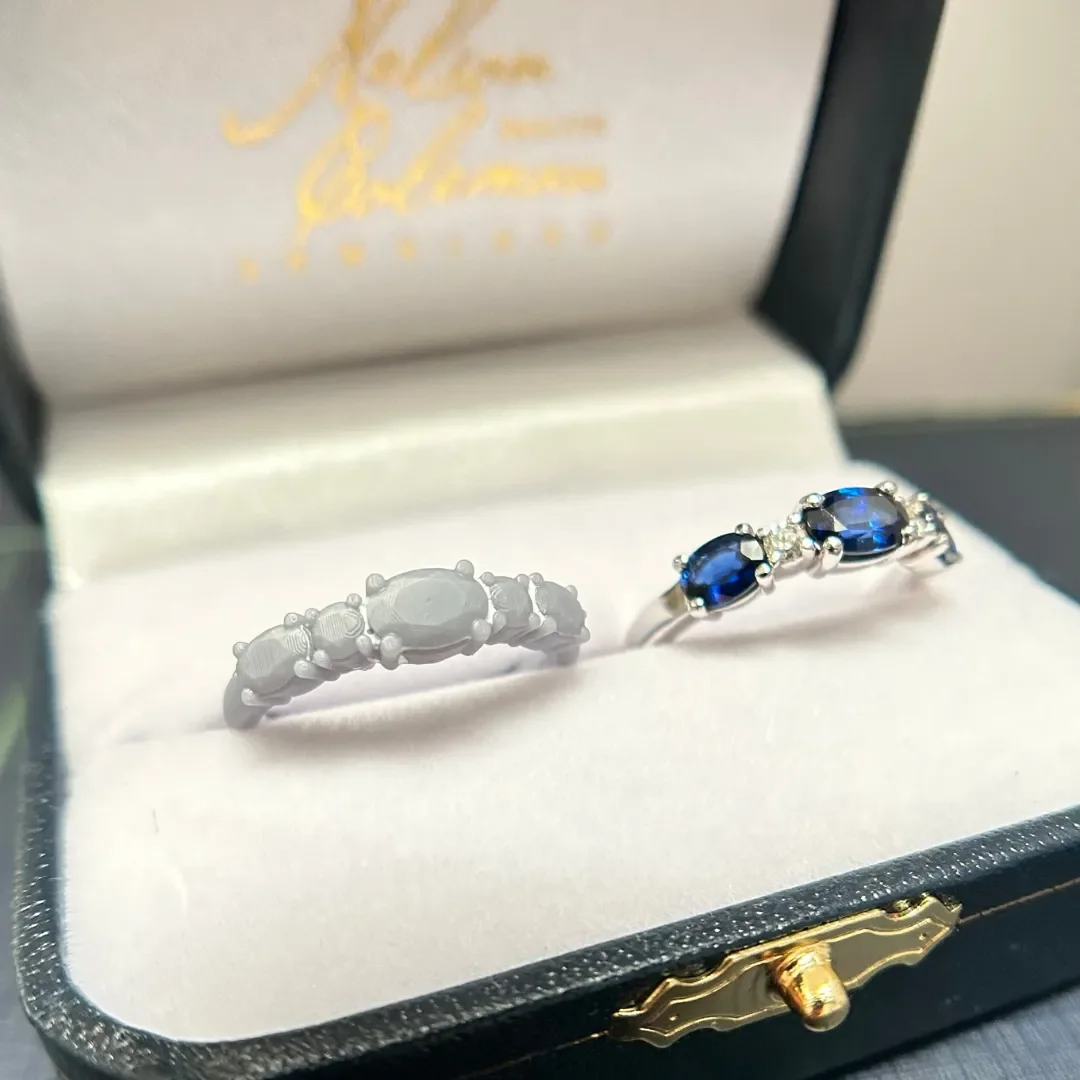
- Bespoke Design (True Custom Jewelry): This is the process of creating a piece around your ideas from the initial design stage. It begins as an idea, a sketch, or a feeling. A jeweler or designer may use Computer-Aided Design (CAD) modeling to create a digital 3D rendering of the piece. Once approved, the model can be translated into a physical wax pattern, cast in your metal of choice, and hand-finished by a bench jeweler.
Many people believe that designing a piece from scratch is a stressful process reserved only for the ultra-wealthy, but that is simply not true. If you want to separate fact from fiction, take a look at our guide on Custom Jewelry Design 5 Myths Debunked.
Popular Styles and Occasions for Personalized Pieces
Custom jewelry is a meaningful way to celebrate life's most important moments. Because it can carry personal significance, it makes a thoughtful gift for major milestones.
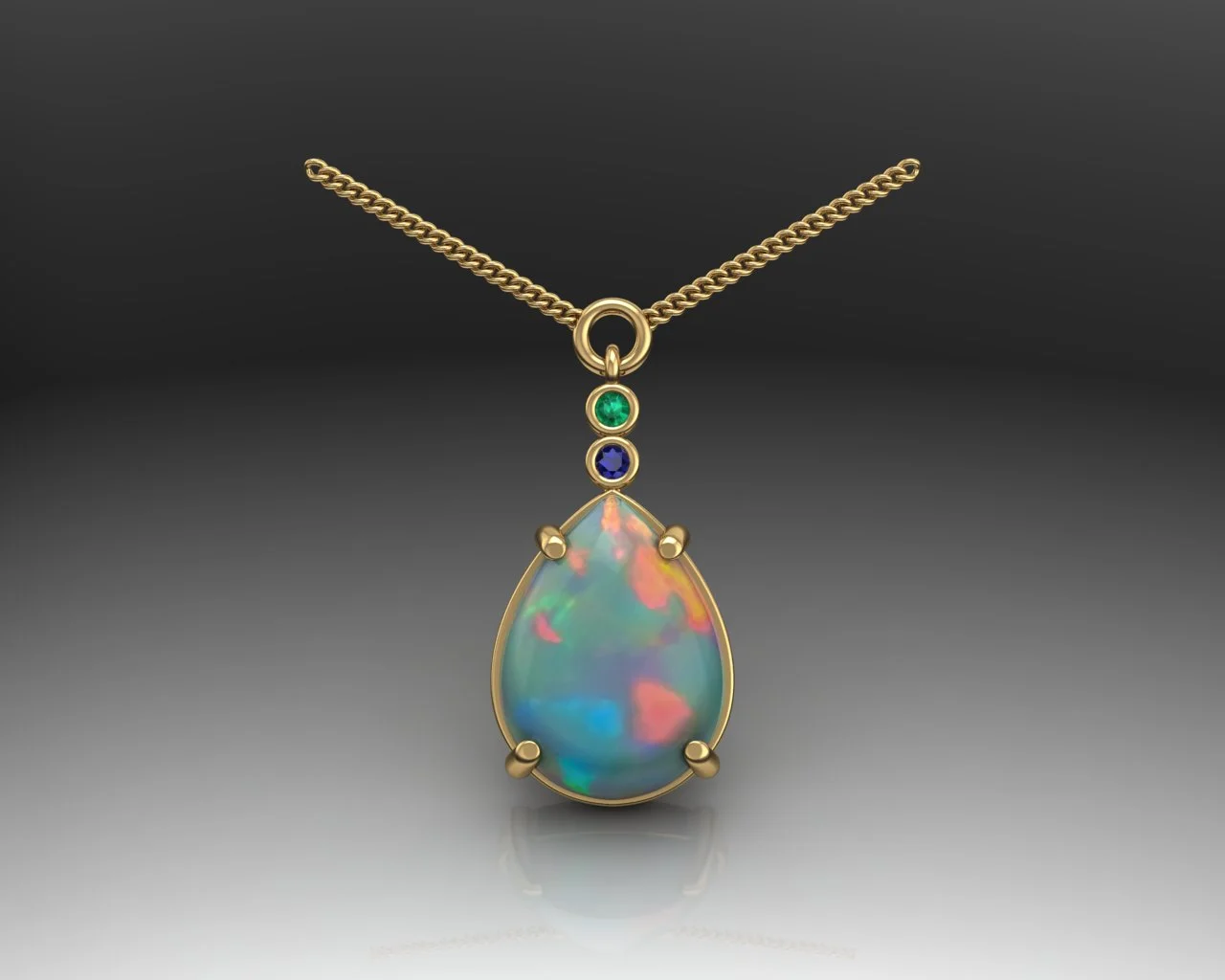
Whether you are looking to treat yourself or surprise a loved one, several styles have stood the test of time:
- Nameplate Pendants and Initial Jewelry: Perfect for new mothers, grandmothers, or partners who want to keep their loved ones close to their hearts.
- Birthstone Rings and Stacks: A vibrant, colorful way to represent family members. Stacking rings with different birthstones allows you to build a modular family tree on your finger.
- Coordinate and Date Bracelets: Engraving the exact latitude and longitude of where you met your partner, got married, or bought your first home turns a simple piece of metal into a private map of your memories.
These pieces are popular for anniversaries, graduations, Mother’s Day, and weddings. When it comes to bridal jewelry, customizing your setting gives you more control over the ring's style and details. To explore the process, read our guide to creating a custom engagement ring.
Looking for a gift for a specific anniversary? Explore our jewelry anniversary gifts by year for ideas based on traditional anniversary themes.
Designing Custom Jewelry for Men
Custom jewelry isn't just for women. Men's custom jewelry ranges from classic engraved pieces and signet rings to bold designs influenced by contemporary streetwear.
Men's custom designs often focus on bold, structural elements. Popular styles include:
- Iced-Out Nameplates and Bubble Letters: Often featuring brilliant-cut diamonds or moissanite to command attention.
- Jersey Numbers and Sports Identity: Custom pendants representing a personal or favorite player's jersey number are a favorite for game days.
- Understated Engraved Bands and Signet Rings: For a more subtle look, many men opt for heavy metal signet rings engraved with family crests, initials, or significant dates.
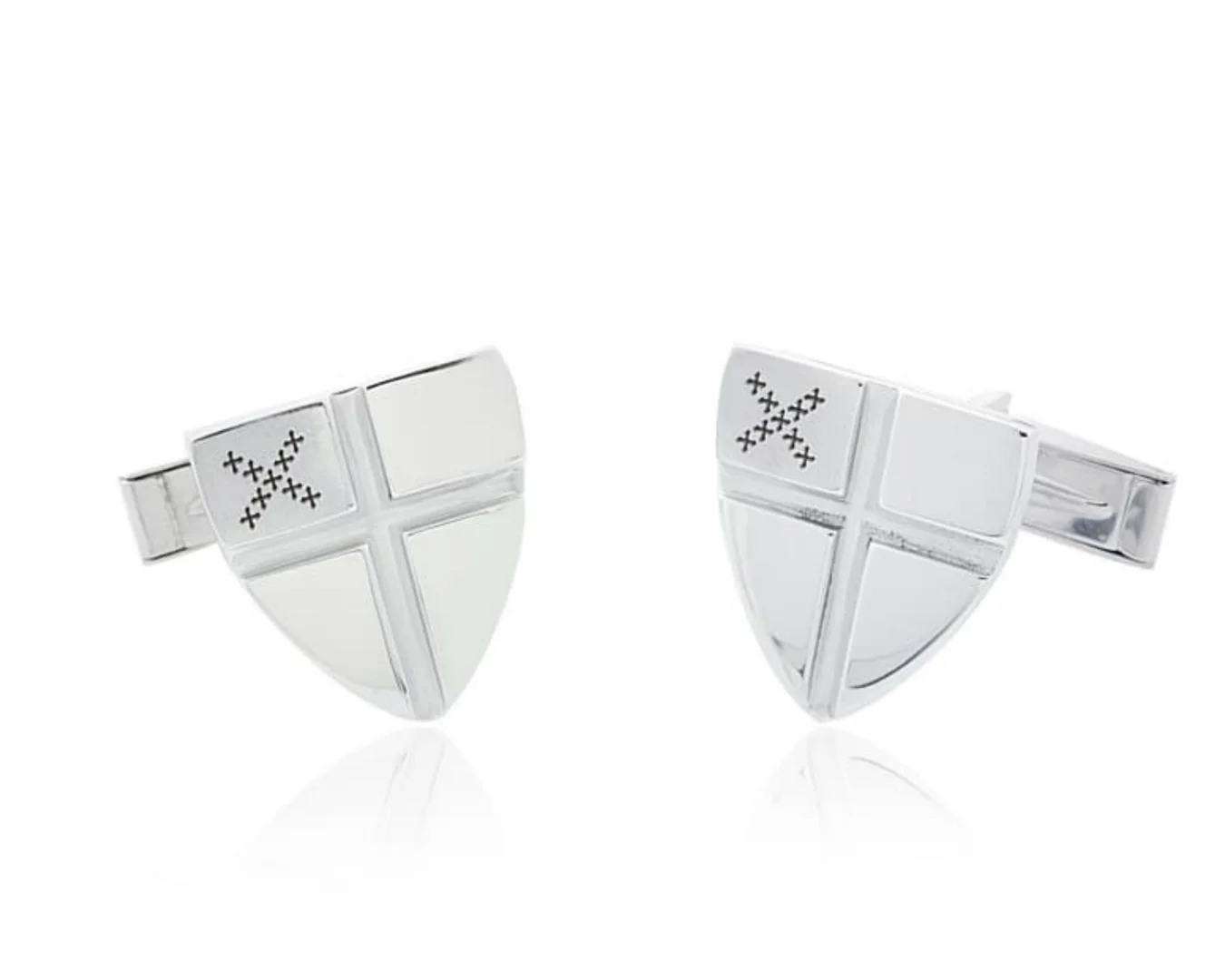
When designing custom jewelry, consider how the piece will be worn and what details will make it personal. Custom rings and wedding bands offer men options ranging from understated designs to distinctive pieces that reflect their individual style. For more inspiration, read our guide on whether men wear engagement rings.
Modern Heirlooms: Initial Necklaces, Birthstones, and Engravings
One of the most meaningful qualities of a custom piece is its potential to become a modern heirloom. Today's technology allows us to personalize jewelry in a variety of ways.
One touching option is handwriting replication. With high-precision laser engraving, a jeweler may be able to reproduce the script from a photograph of a handwritten note from a parent, grandparent, or child onto a mini locket or disc necklace, depending on the image quality and design. Learn more about our jewelry engraving services.
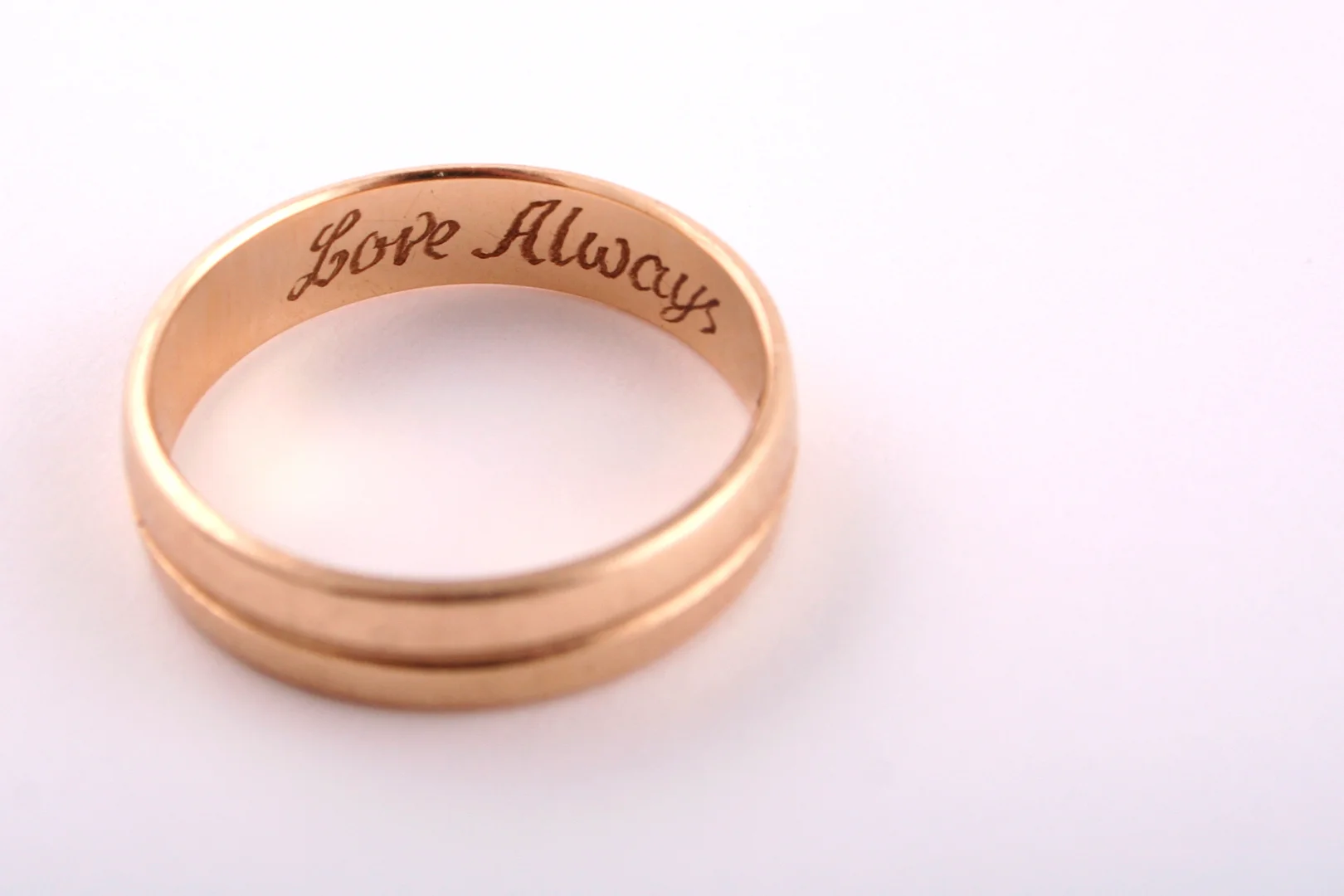
Additionally, modular "build-your-own" family charm necklaces allow you to start with a base chain and add initial discs, birthstones, or symbolic charms over time as your family grows or new milestones are reached. Our gemstone education guide can help you learn more about gemstone colors, characteristics, and care.
The Step-by-Step Custom Design and Ordering Process
If you have never commissioned a piece of jewelry, the process might seem intimidating. However, a professional jeweler can guide you through the steps, turning your ideas into a finished piece.
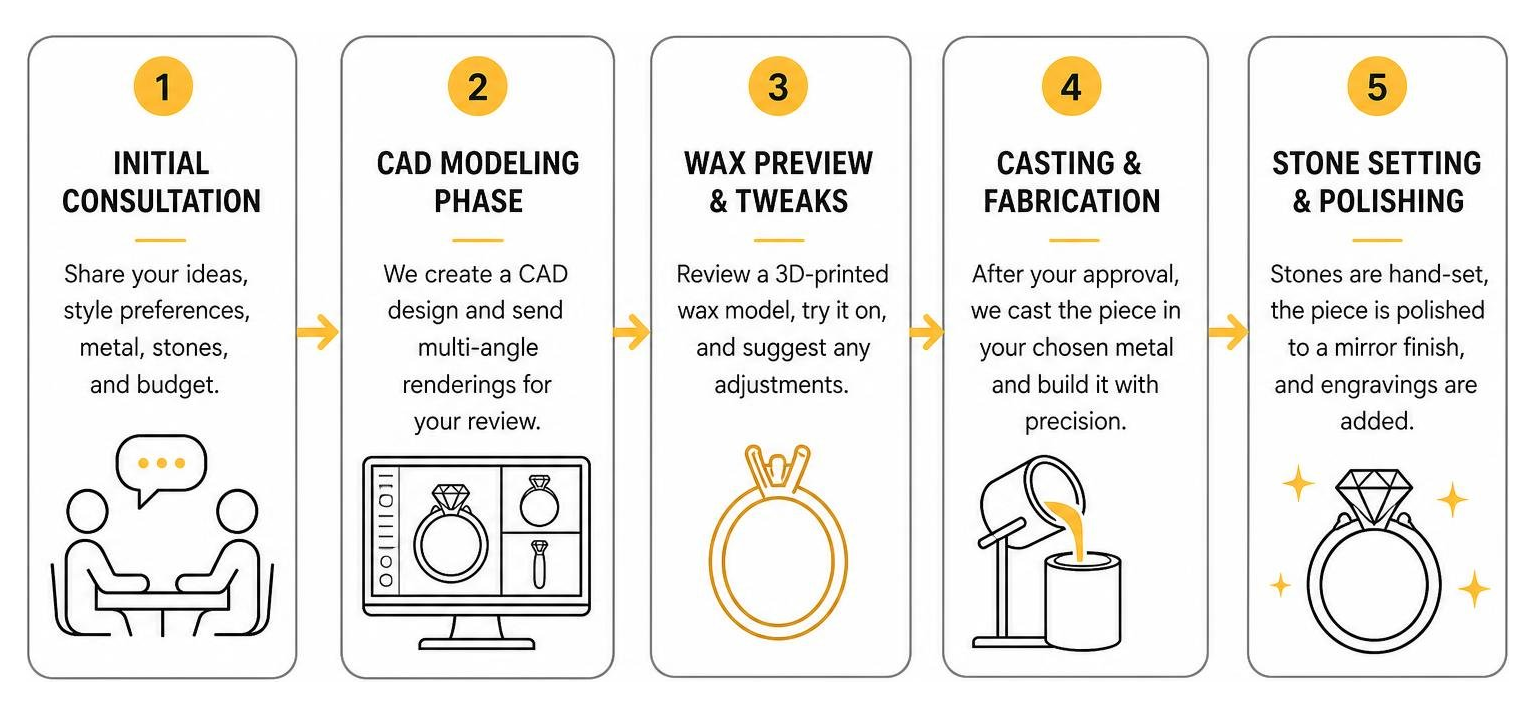
Here is how the journey typically unfolds from your first conversation to the final presentation:
-
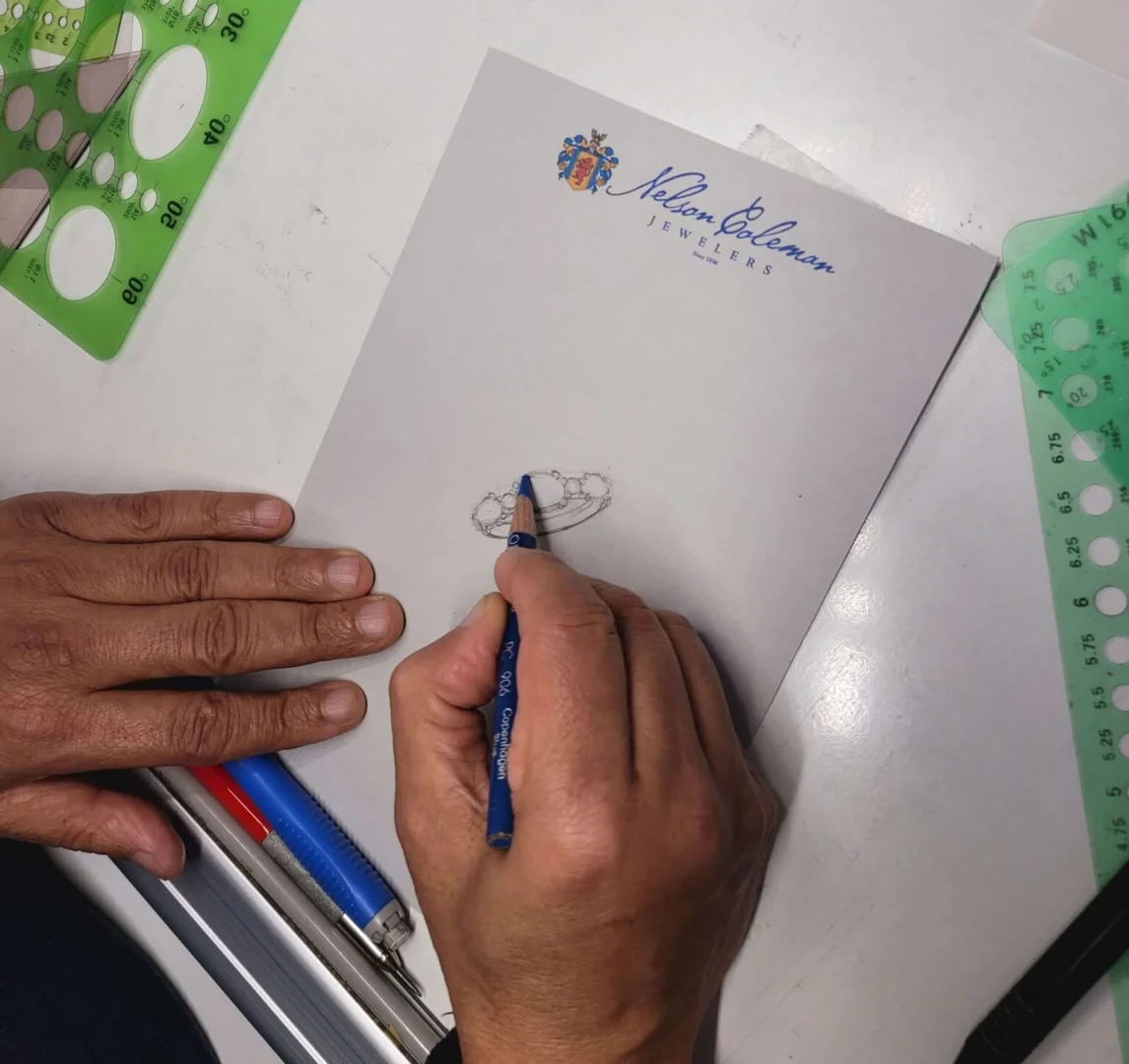
The Initial Consultation: You don't need to be an artist or know exactly what you want. You can bring in screenshots, inspiration photos, sketches, or simply describe what you have in mind. You will discuss your style, metal preferences, gemstone choices, and budget.
-
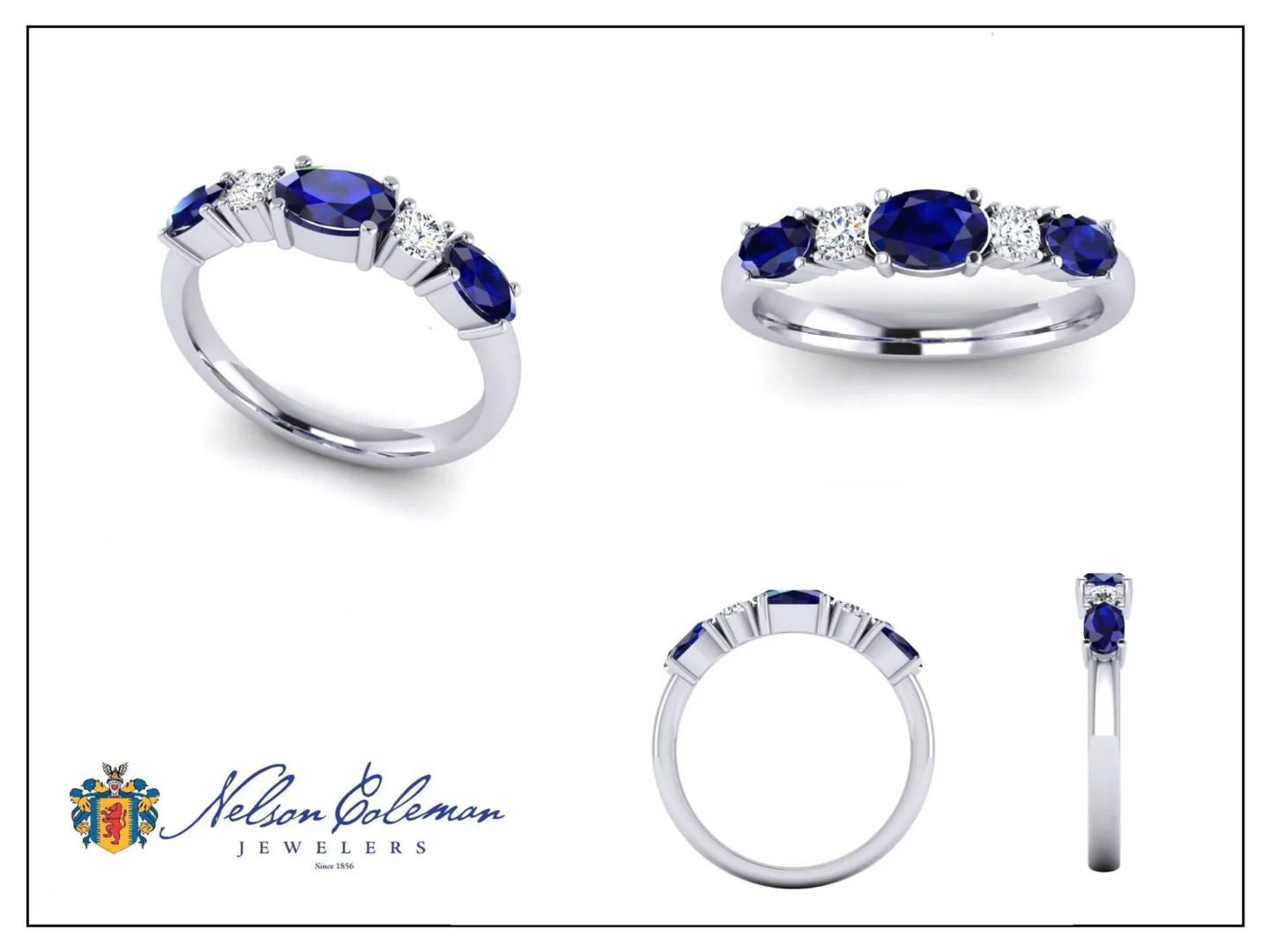
The CAD Modeling Phase: Designers can translate your ideas into a Computer-Aided Design (CAD) model. Digital renderings allow you to review the proposed design from multiple angles.
-
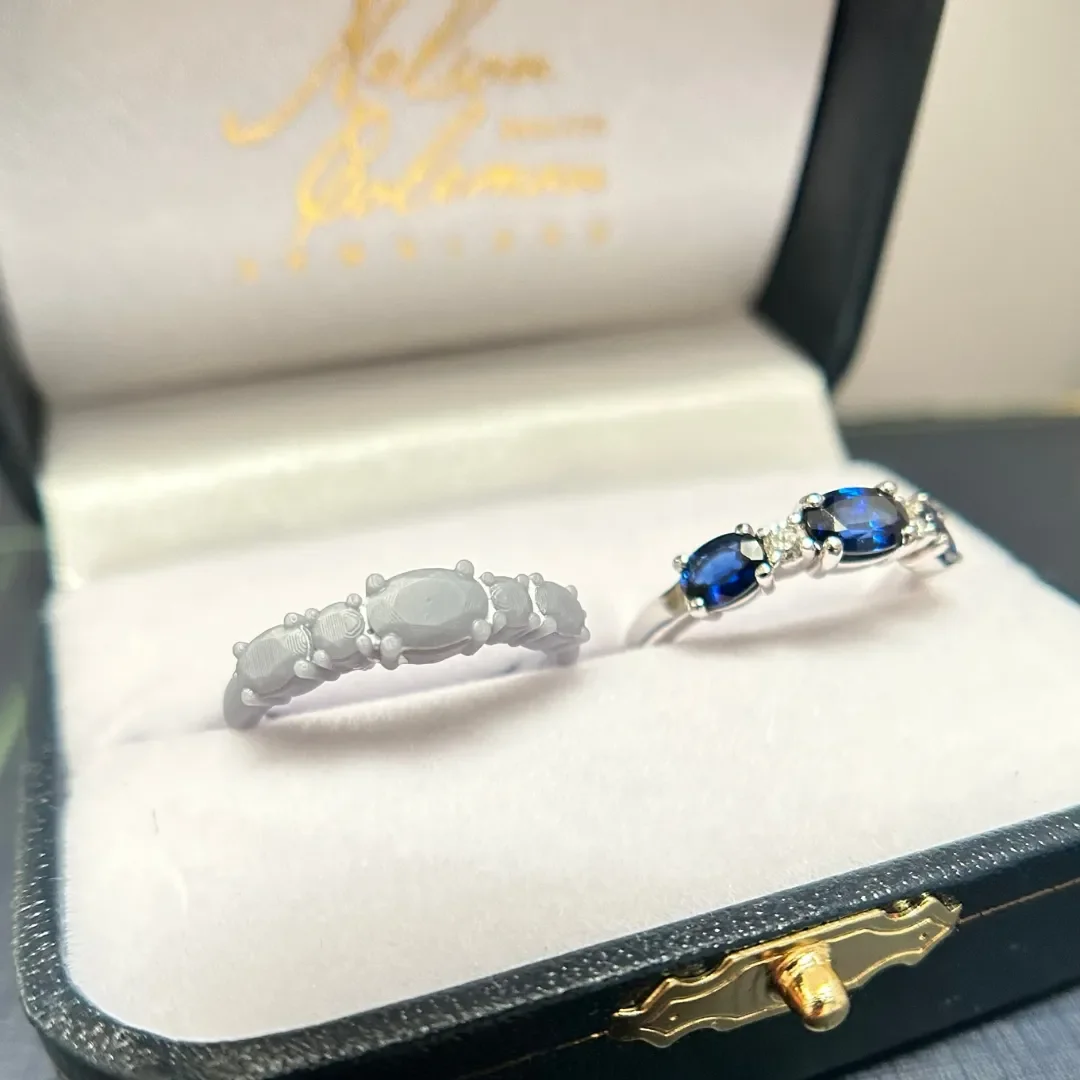
Wax Preview and Adjustments: If offered for your project, a physical 3D-printed wax model can be created. This allows you to examine the prototype, check its scale, and discuss any adjustments before casting.
- Casting and Fabrication: Once you approve the design, the model may be used to cast the piece in your chosen metal, such as 14K gold or platinum.
- Stone Setting and Polishing: The jeweler sets the gemstones, polishes the metal, and adds any agreed-upon custom engravings.
-
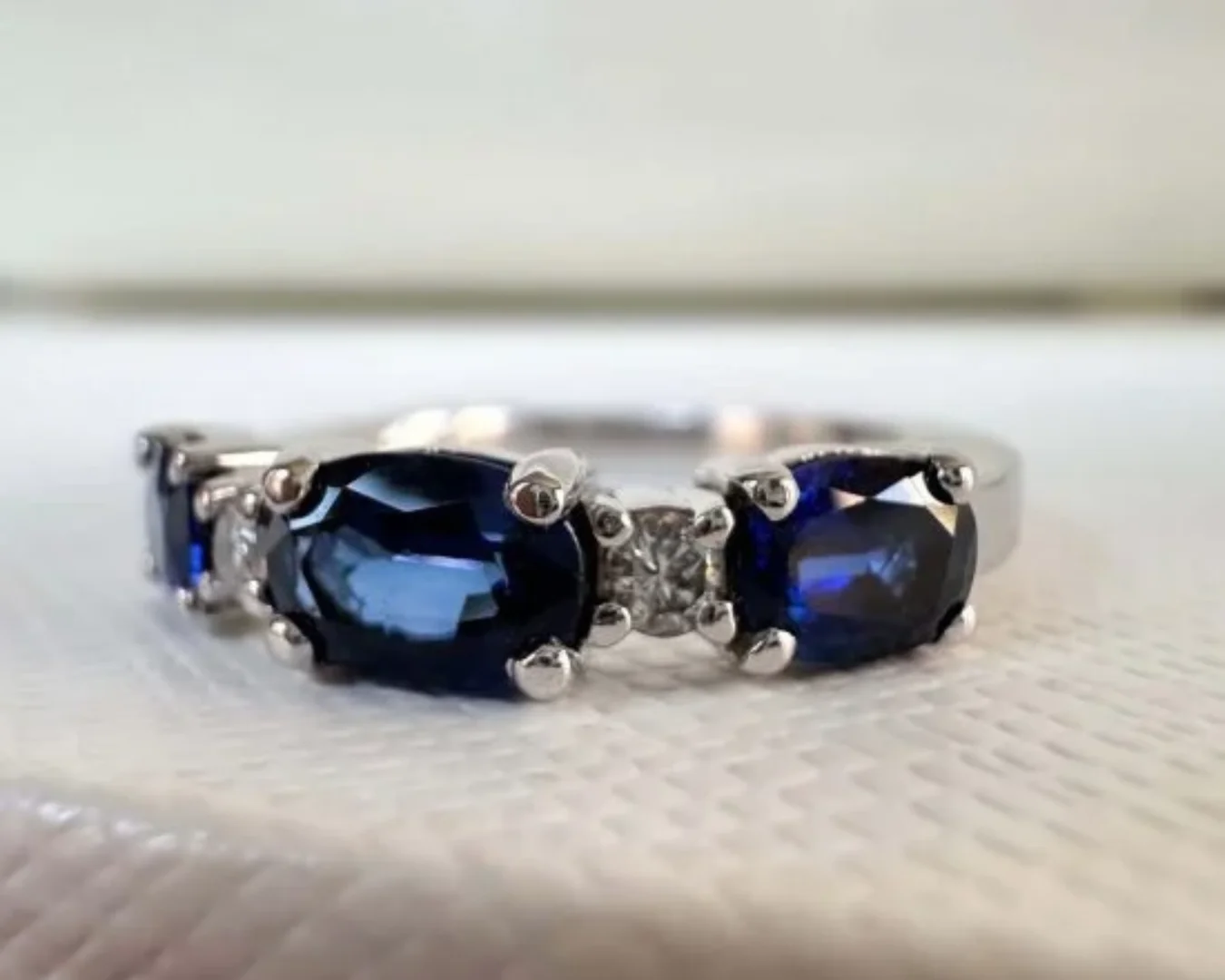
The Reveal: Your completed piece is presented to you, ready to wear.
Repurposing Heirloom Materials and Vintage Gemstones
You do not have to buy brand-new materials to create a custom piece. In fact, some custom projects involve giving new life to inherited jewelry.
If you have vintage estate pieces sitting in a safety deposit box because they aren't your style, a jeweler may be able to remove the diamonds and gemstones and reset them into a new design. Depending on the condition and composition of the original metal, it may also be possible to reuse or refine old gold. A jeweler can evaluate the materials and explain the options before work begins.
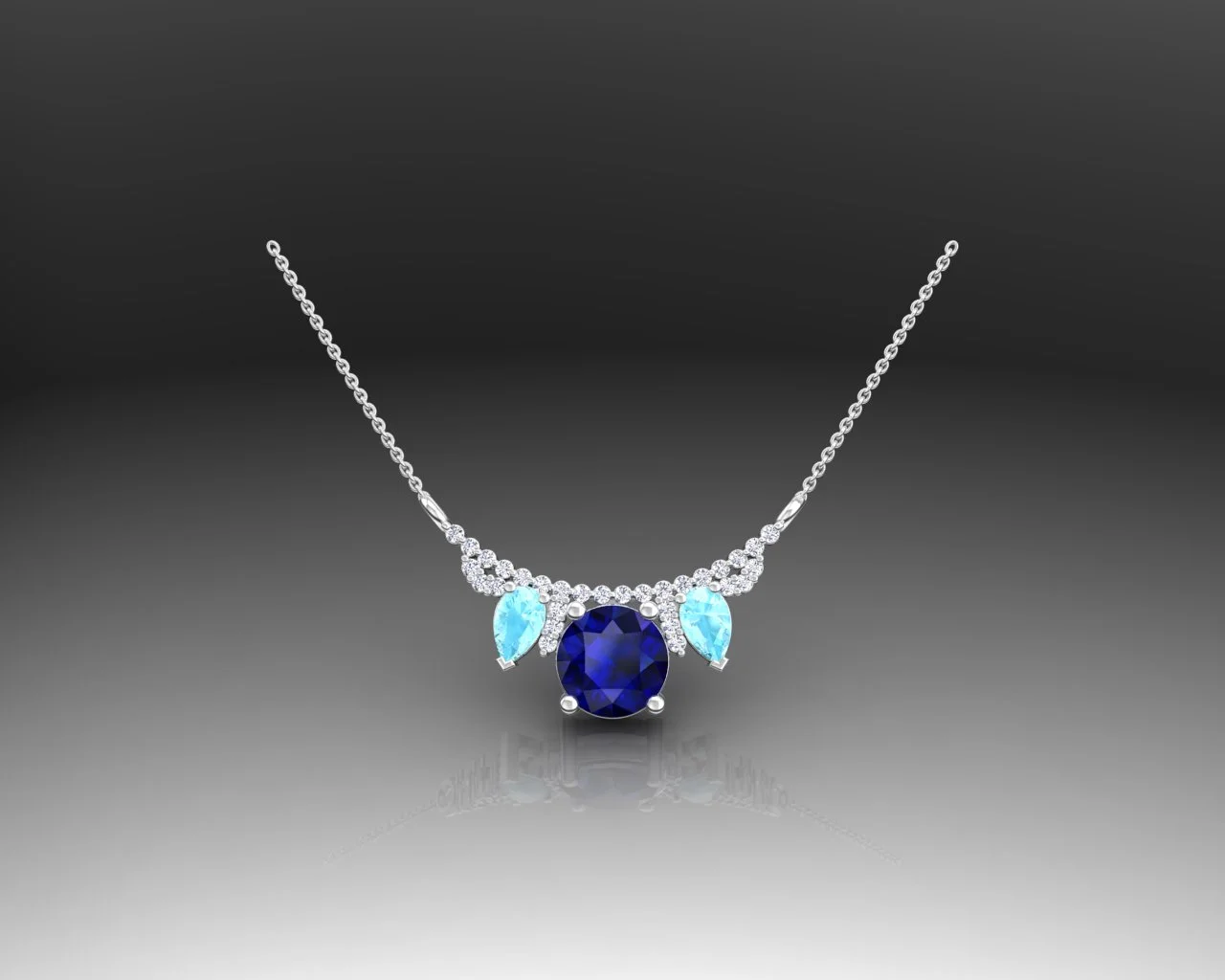
For inspiration on how to transform your older pieces, read our Ideas for Repurposing Your Vintage Estate Jewelry and discover real-life journeys in our Custom Engagement Ring Stories.
Timelines and Sourcing for Your Custom Jewelry Project
How long does it take to bring a custom piece to life? As a general rule, you should allow four to eight weeks for the entire process, although timelines vary by jeweler and project.
Your timeline can be influenced by gemstone sourcing. If you are looking for a highly specific or rare gemstone, additional time may be needed to locate and obtain a suitable stone before fabrication begins. Ask your jeweler for an estimated timeline based on your design and material choices.
If you are planning a custom piece for a wedding, graduation, or holiday gift, we recommend booking your consultation at least two to three months in advance to allow time for design, sourcing, and production.
If your design includes a diamond, learn more about our Antwerp Diamond Experience.
Materials, Finishes, and Cost Factors
The materials you choose will have a significant impact on both the durability and the final price of your custom jewelry. Understanding the differences between metal types is key to making an informed decision. For additional consumer guidance on jewelry metal quality claims and terminology, the Federal Trade Commission publishes its Jewelry Guides.
| Metal Type | Metal Purity / Composition | Relative Price | Best Used For |
|---|---|---|---|
| Sterling Silver | 92.5% silver, 7.5% other metals | Accessible ($) | Casual wear, fashion jewelry, large statement pieces |
| Gold-Filled | A layer of gold mechanically bonded to a base metal | Moderate ($$) | Chains, charms, and other jewelry where a gold finish is desired at a lower price than solid gold |
| Gold Vermeil | Gold plating over a sterling silver base that meets applicable requirements for gold fineness and coating thickness | Moderate ($$) | Earrings, pendants, and other fashion jewelry |
| Solid 14K / 18K Gold | Approximately 58.3% to 75% gold, mixed with other metals | Premium ($$$) | Engagement rings, wedding bands, and fine jewelry |
| Platinum | A precious metal commonly used in high-purity alloys for fine jewelry | Premium to high ($$$–$$$$) | Naturally white and dense; can develop a patina with wear. |
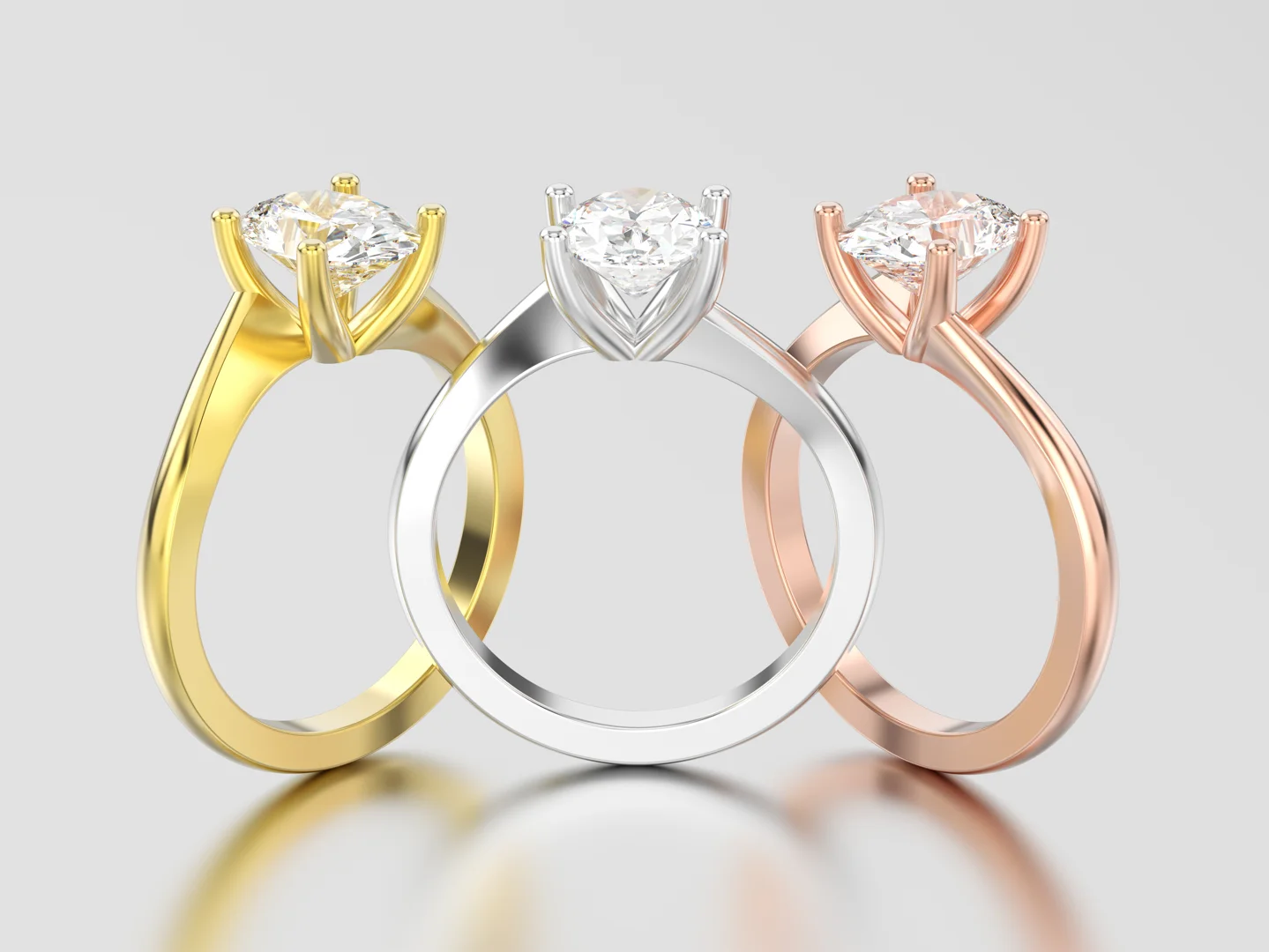
Choosing Your Metals:
When selecting a metal, consider how often you plan to wear the piece:
- Solid Gold(14K/18K): Available in yellow, white, and rose gold. A versatile choice for fine jewelry, with durability depending on the alloy and design.
- Platinum: A naturally white precious metal often chosen for engagement rings and other fine jewelry. Its density and wear characteristics differ from gold.
- Sterling Silver: An accessible precious metal suited to many custom designs, from pendants and earrings to rings. It can tarnish and may need periodic polishing.
- Gold Vermeil and Gold-Filled: Options for achieving a gold appearance at a lower initial cost than solid gold. Both have gold surface layers that can wear over time.
- Alternative Metals: Stainless steel, titanium, and tungsten carbide may suit some contemporary or specialty designs. They are not interchangeable, and some can be difficult or impractical to resize or repair.
Understanding Pricing and Budgeting for Bespoke Designs
Because every custom commission is unique, there is no flat rate. The price of your project is determined by three main factors:
- Material Costs: The weight of the metal and the market price of gold or platinum at the time of fabrication, combined with the size, cut, and quality of your gemstones.
- Design Complexity: A simple, clean band generally requires less design and labor time than an intricate, vintage-inspired halo ring with dozens of hand-set pavé diamonds.
- Labor: The hours of skilled craftsmanship required for CAD modeling, casting, finishing, stone-setting, and polishing.
The best way to approach a custom project is to establish a comfortable budget upfront. A talented designer can adjust material choices, such as opting for a slightly smaller center stone or choosing 14K gold instead of platinum, to achieve your desired aesthetic within your budget.
If your design includes a diamond, our diamond education guide can help you understand the characteristics that influence diamond quality and price.
Frequently Asked Questions About Custom Jewelry
How much does custom jewelry cost?
The cost of custom jewelry depends on the materials, gemstones, design complexity, and labor involved. A simple personalized piece may cost considerably less than a custom engagement ring featuring precious metals and diamonds. Setting a budget at the beginning of the design process helps your jeweler recommend options that fit your preferences and price range.
Are custom pieces covered by warranties, and what is the return policy?
Because custom jewelry is made to a customer's specifications, return options may be more limited than for ready-made pieces. Policies vary by jeweler, so confirm the terms before approving your design.
Ask your jeweler what warranty or repair coverage is offered and which conditions or exclusions apply. Before production begins, review the design, materials, measurements, and other details to make sure the finished piece matches your expectations.
How Can You Find a Reputable Custom Jeweler?
You don't need to travel across the country to find a jeweler for a custom project. When comparing jewelers in Maryland, West Virginia, or elsewhere, look for a combination of relevant experience, professional credentials, clear communication, and a transparent design process.
Consider these factors when choosing a jeweler:
-
Professional credentials and memberships: Look for relevant gemological education, such as a GIA Graduate Gemologist credential, and consider jewelers affiliated with organizations such as the American Gem Society (AGS) or Jewelers of America (JA). These organizations offer ways to learn about professionals' qualifications and industry commitments.
-
A portfolio of completed custom work: Review examples of finished pieces to assess the jeweler's style, craftsmanship, and experience with projects similar to yours.
-
A clear design and production process: Ask how your design will be developed, who will make the piece, and whether any work will be handled by outside specialists.
-
Transparent pricing and communication: Look for clear estimates, an explanation of what is included, and an opportunity to approve the design and cost before production begins.
-
A strong reputation: Read local reviews and look for evidence of established customer relationships and reliable service.
An on-site workshop can be useful, but it is not essential. Some reputable jewelers work with trusted external specialists for parts of the design or manufacturing process. The important thing is to understand who will make your piece, how the work will be handled, and what support is available after completion.
Conclusion
Commissioning a piece of custom jewelry is more than just a transaction; it is a collaborative, creative journey. It allows you to take your memories, your relationships, and your personal style and express them through precious metal and stone.
At Nelson Coleman Jewelers, we have spent generations helping customers bring personal designs to life. Across our locations in Towson, MD, Frederick, MD, Easton, MD, and Inwood, WV, we combine CAD technology with traditional bench craftsmanship to help turn your ideas into jewelry.
Ready to start your custom journey? Contact us today to book your design consultation, and read our guide on Custom Jewelry Design: 5 Myths Debunked to learn how accessible the process can be.


