

What Real Oval Diamond Rings Actually Look Like on Different Finger Sizes
How a 2 Carat Oval Diamond Ring on Hand Compares Across Finger Sizes
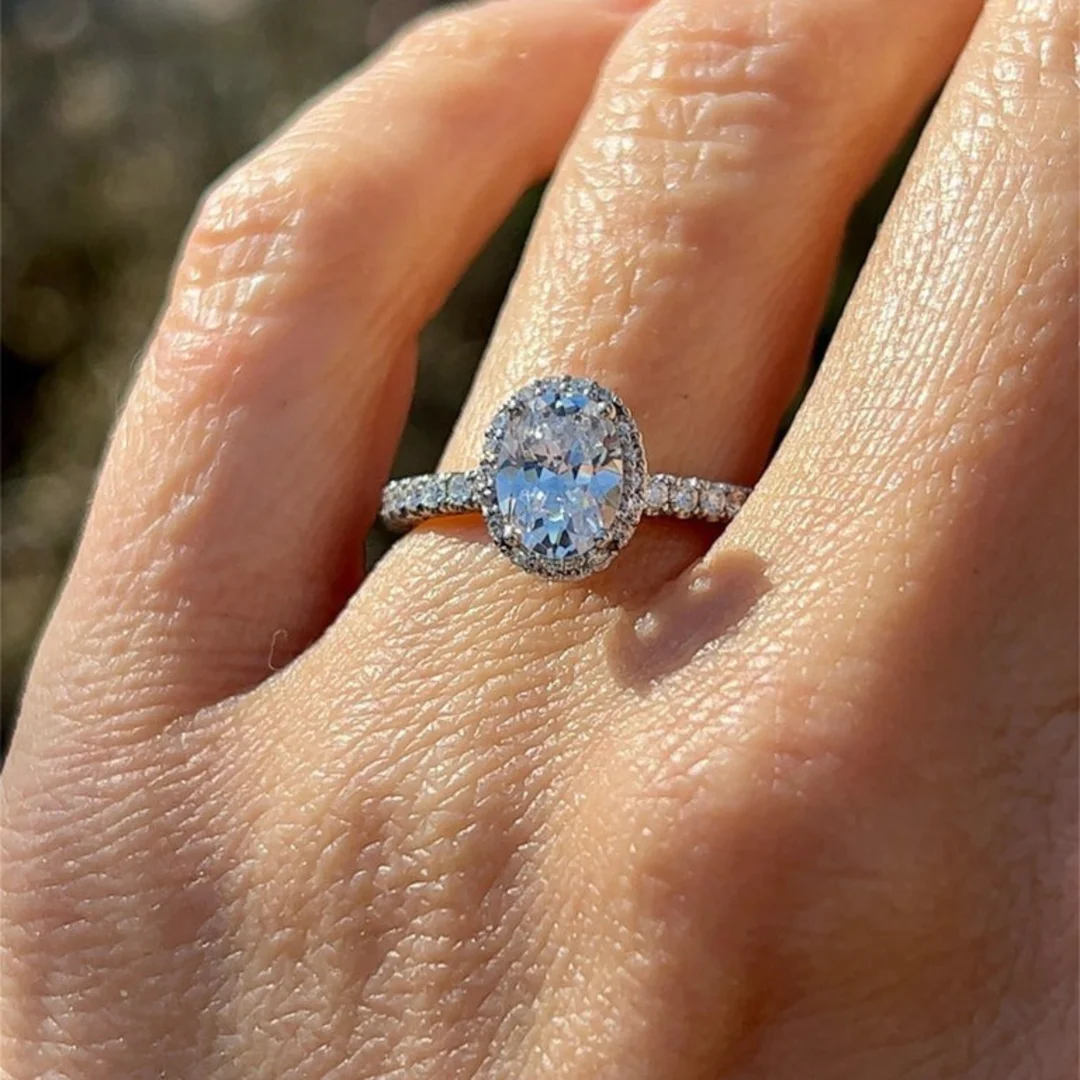
The way a diamond presents itself depends heavily on the finger wearing it. Because oval cuts carry a significant portion of their carat weight across their top surface, they deliver high visual finger coverage.
A standard 2 carat oval diamond may measure approximately 10.23 mm in length and 6.82 mm in width, although dimensions vary with the stone's proportions. Compared with an estimated finger width of 16 to 17 mm, the diamond can cover a substantial portion of the finger. These measurements are illustrative rather than universal, since finger widths vary even among people who wear the same ring size. To determine your ring size before shopping, consult our handy ring size guide.
| Finger Size | Approximate Finger Width (mm) | 2ct Oval Width Coverage (%) | Visual Impact Description |
|---|---|---|---|
| Size 3–4 | 14.1 – 14.9 mm | ~46% – 48% | Maximum knuckle-to-knuckle presence; bold statement |
| Size 5–6 | 15.7 – 16.5 mm | ~41% – 43% | Highly prominent, classic proportion; noticeable spread |
| Size 7–8 | 17.3 – 18.1 mm | ~38% – 39% | Perfectly balanced silhouette; naturally elongating |
| Size 9+ | 18.9+ mm | ~36% or less | Elegant, slenderizing look; pairs well with wider bands |
Petite Fingers: Size 3 to 5
On petite hands, a 2 carat oval diamond commands immediate attention. Its elongated shape and substantial face-up size can cover a large portion of the finger, creating a bold look without requiring an oversized setting.
For smaller ring sizes, band width plays a critical structural and aesthetic role. A delicate 1.5 mm to 1.8 mm band keeps the focus centered entirely on the diamond, making the gem appear even grander. Delicate four-prong settings or minimalist peg heads prevent the ring from overwhelming a petite hand.
Average Fingers: Size 6 to 7
Sizes 6 through 7 represent the most common ring sizes. On these hands, a 2 carat oval strikes an ideal balance between everyday wearability and undeniable sparkle.
The diamond covers roughly 40% of the finger's width, creating a timeless look that feels substantial without getting in the way of daily tasks. Solitaire settings, delicate pavé bands, and subtle hidden halos integrate seamlessly with these finger proportions.
Larger Fingers: Size 8 and Above
On hands sized 8 and above, an oval cut offers a wonderful optical advantage: vertical elongation. The vertical line drawn by a 10 mm stone creates a flattering, slimming contour along the finger.
To enhance presence on wider fingers, consider pairing a 2 carat center stone with accent features. Three-stone arrangements, split shanks, and wider bands (2.2 mm to 3.0 mm) provide excellent structural support while filling out the hand's natural proportions.
Dimensions and Proportions: Why Oval Diamonds Look Larger
Carat is a measurement of weight, not physical size. Two diamonds of identical weight can look vastly different from the top depending on how they are cut.
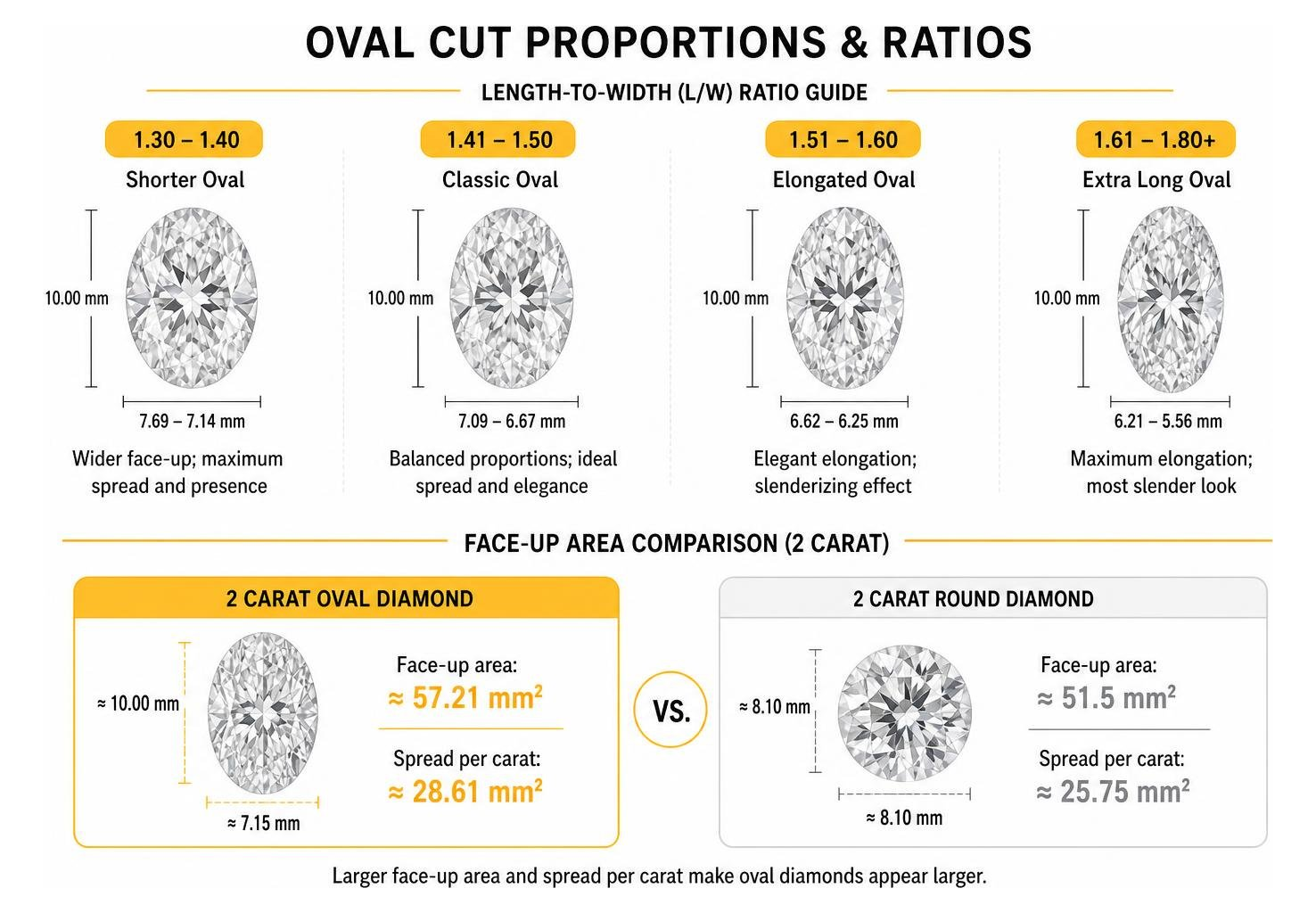
Oval diamonds have an elongated brilliant facet pattern that can create the appearance of greater size compared with round diamonds of the same carat weight. A 2 carat oval's face-up area varies according to its length, width, and overall proportions. Some ovals offer more visible surface area than round brilliants of the same weight, but the difference depends on the individual stones being compared.
Read our expert blog What are the Different Diamond Shapes? to learn more.
Length-to-Width Ratio and Finger Elongation
The length-to-width (L/W) ratio determines the outline profile of the diamond:
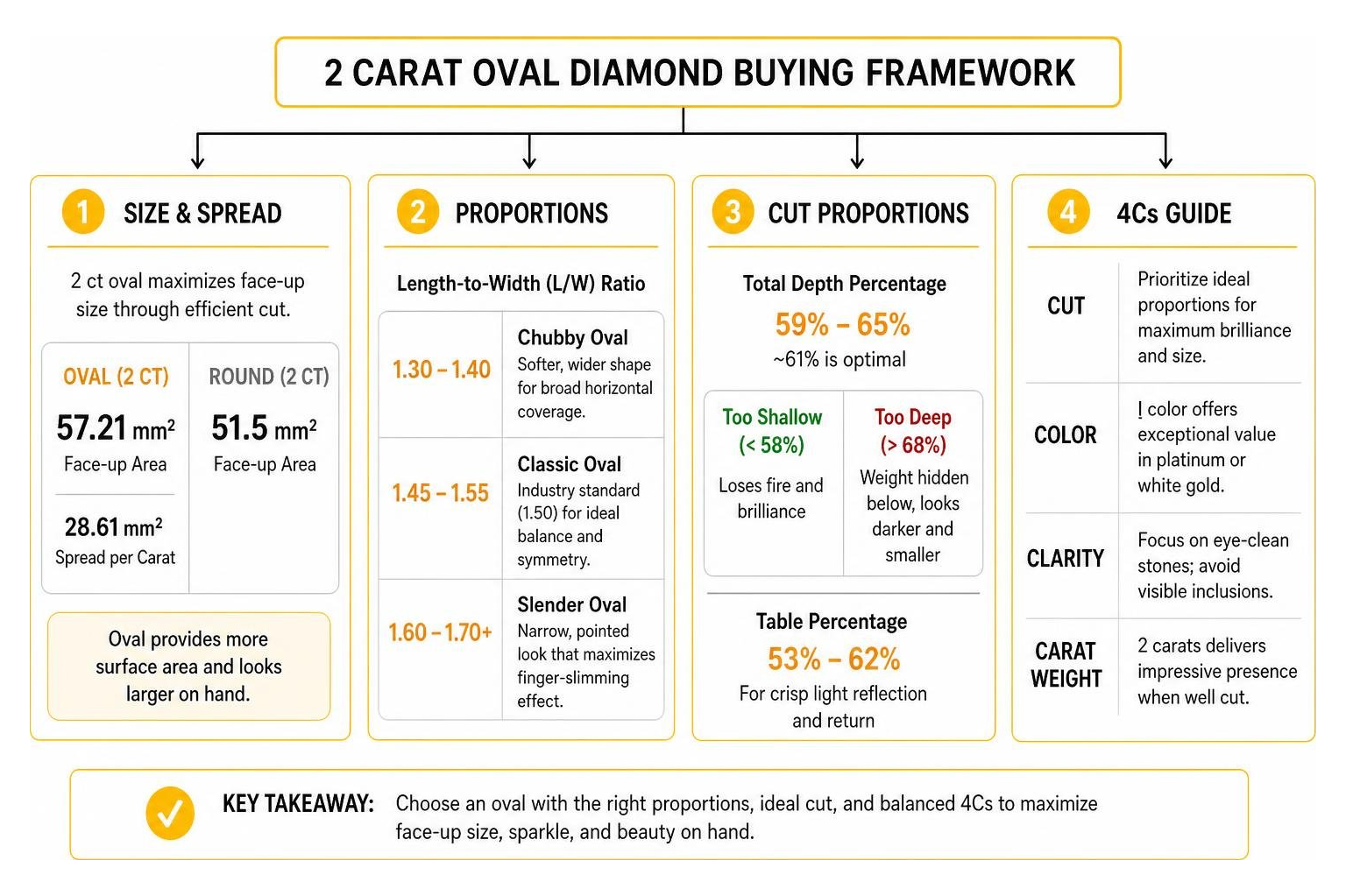
- 1.30 to 1.40 (Chubby Oval): A softer, wider shape that provides broad horizontal coverage.
- 1.45 to 1.55 (Classic Oval): The industry standard ratio (with 1.50 being the benchmark), delivering the ideal blend of vertical finger elongation and graceful symmetry.
- 1.60 to 1.70+ (Slender Oval): A distinctly narrow, pointed aesthetic that maximizes finger-slimming effects.
Ideal Depth and Table Proportions
To evaluate an oval diamond's sparkle and face-up appearance, consider its depth and table percentages alongside its overall proportions and light performance. Unlike round brilliant diamonds, oval diamonds do not have one universally accepted set of ideal cut proportions, so these measurements are best used as a starting point rather than strict pass-or-fail rules.
- Total Depth Percentage: Depth affects how a diamond distributes its weight between its visible surface and its lower portion. A stone that is too deep for its other proportions may look smaller face-up, while a stone that is too shallow may have less appealing light performance. Evaluate the complete diamond rather than relying on a single depth percentage.
- Table Percentage: The table influences how light enters and exits the diamond, but there is no single percentage that guarantees excellent performance in every oval. Consider the table alongside the depth, facet arrangement, and the diamond's overall appearance.
The 4Cs Guide for a 2 Carat Oval Diamond
Navigating diamond quality requires balancing your budget across the 4Cs (Cut, Color, Clarity, and Carat Weight). When shopping for larger fancy shapes, review our step-by-step guide to buying diamonds to prioritize what matters most to the naked eye. Always insist on independent, third-party laboratory grading from respected institutions like the GIA or IGI.
Choosing the Best Color for a 2 Carat Oval Diamond Ring on Hand
Because oval diamonds concentrate body color at their rounded tips, color grades show slightly more in ovals than in standard round brilliants. However, you do not need to pay premium prices for D–F colorless stones to achieve an icy appearance:
- Platinum and White Gold: An I color grade offers exceptional value while still looking bright and white to the naked eye.
- Yellow Gold and Rose Gold: A J color grade blends warmly into yellow or rose gold settings, allowing you to reallocate your budget toward cut quality or size.
Clarity and Avoiding the Bow-Tie Effect
The complex facet structure of an oval diamond can make some inclusions less noticeable, depending on their size, type, and location. Some SI1 and SI2 diamonds appear eye-clean at normal viewing distances, offering potential savings compared with higher clarity grades. However, clarity grades alone cannot guarantee an eye-clean appearance, so examine each diamond individually before purchasing.
The primary visual factor to evaluate in person or via high-definition 360-degree video is the bow-tie effect. This is a dark, bowtie-shaped shadow across the center facets caused by light obstruction when viewing the stone. While nearly all oval cuts display a faint bow tie due to their geometry, well-cut diamonds minimize this contrast so it does not distract from the gem's overall brilliance.
Setting Styles and Metal Choices for 2ct Ovals
The setting holds your stone securely while framing its proportions on your hand.
When browsing our collection of curated diamond engagement rings, explore how setting styles influence finger coverage:
- Four-Prong Solitaires: Minimal metal contact highlights the elongated geometry of the oval. Petite claw prongs keep the corners crisp.
- Six-Prong Solitaires: Adds security while accentuating a smooth, rounded outline.
- Pavé Bands: Small diamonds encrusted along the shank add sparkle and widen the visual impact across the finger.
- Bezel Settings: A smooth metal rim surrounds the perimeter of the stone, helping protect its edges from everyday knocks. Depending on the design and thickness of the rim, the setting can also increase the ring's overall visual footprint.
Learn more about the 4 Cs and other important diamond information on our diamond education page.
Enhancing Finger Coverage with Halos and Side Stones
If you want to maximize presence across your hand, accent stones create broad coverage. Surrounding a center stone with a diamond frame adds up to 2 mm of total width and length.
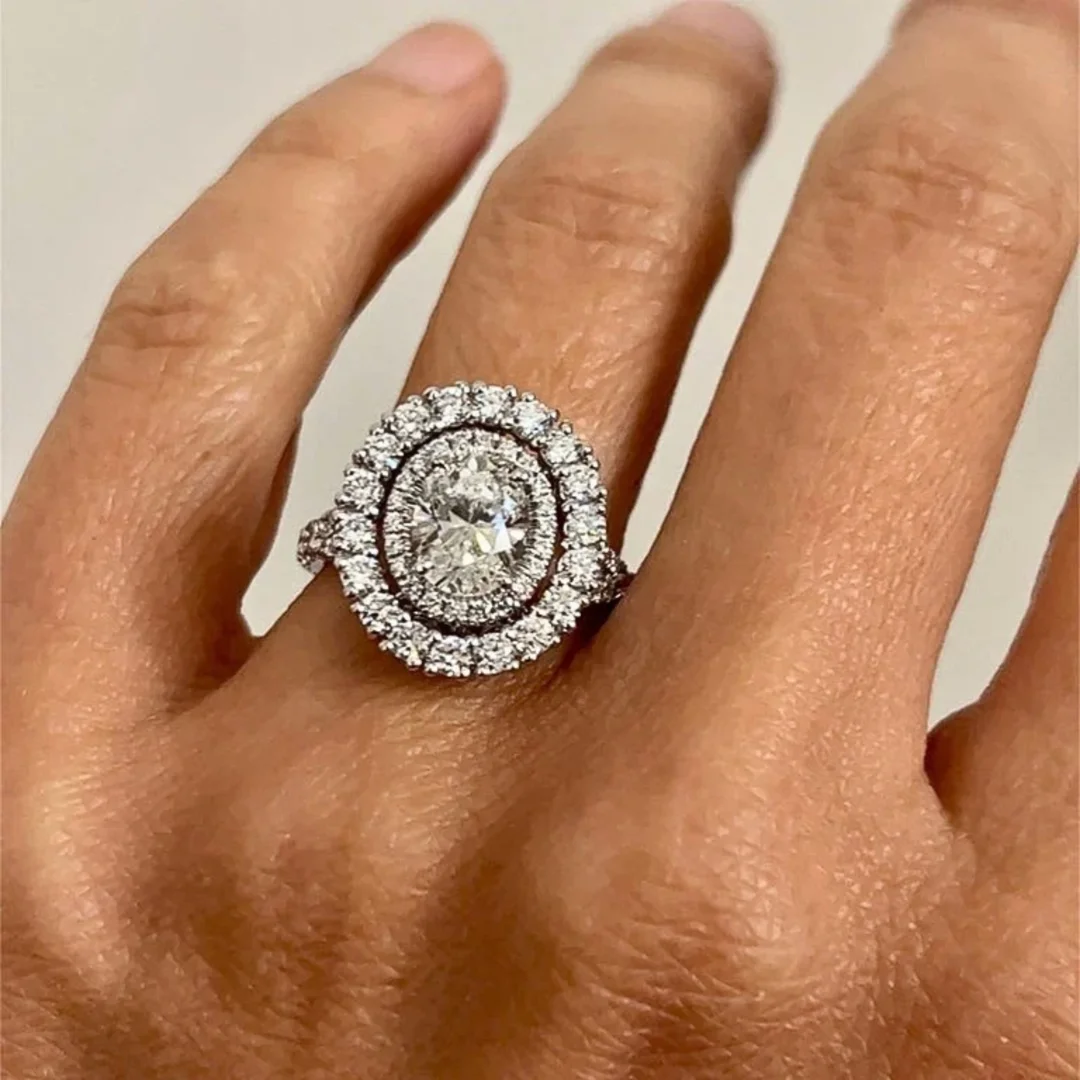
Alternatively, a classic three-stone design flanked by tapered baguettes or pear side stones transitions the focal point across the entire width of your finger.
Lab-Grown vs. Natural 2 Carat Ovals
Both lab-grown and earth-mined diamonds consist of pure crystalline carbon and share identical optical, physical, and chemical properties.
- Lab-Grown Diamonds: Created using advanced technological methods that replicate some of the conditions under which natural diamonds form, lab-grown diamonds share the same fundamental chemical, physical, and optical properties as natural diamonds. They typically cost substantially less, making larger carat weights and higher clarity grades more accessible at a given budget. Explore our collection to compare lab-grown diamond styles and find an option that fits your preferences.
- Natural Diamonds: Formed over billions of years deep within the earth, natural diamonds carry enduring rarity and traditional heirloom appeal.
Learn more about lab-grown diamonds in our expert blog For the Love of Lab Grown.
Frequently Asked Questions About Oval Diamond Rings
How big does a 2 carat oval diamond look on a size 6 finger?
On a size 6 finger (which has an average width of 16.5 mm), a 2 carat oval diamond measuring roughly 10.23 mm long covers approximately 41% to 43% of the finger's width. This proportion provides high visual impact while maintaining comfortable knuckle movement.
Does a 2 carat oval look bigger than a 2 carat round diamond?
An oval diamond can look larger than a round diamond of the same carat weight because its elongated shape often provides more visible surface area. The difference depends on the proportions of the individual stones, so compare their actual measurements rather than assuming every oval will look a specific percentage larger.
How much should I expect to spend on a 2 carat oval diamond?
The price of a 2 carat oval diamond varies widely depending on whether it is natural or lab-grown, as well as its color, clarity, cut proportions, and grading report. Natural diamonds generally cost substantially more than comparable lab-grown diamonds, while differences between individual stones can create significant price variations within each category. Vintage and estate engagement rings also offer distinctive options at a range of price points.
Check out our engagement ring builder to explore styles and pricing.
Conclusion
A 2 carat oval diamond ring remains one of the most flattering, brilliant, and versatile choices available. Its elongated silhouette enhances every finger size, delivering exceptional surface spread, optical finger lengthening, and classic fire.
Finding the right stone involves balancing length-to-width ratios, cut depth, and setting styles to match your personal aesthetic. If you are comparing silhouettes, explore our guide on different diamond shapes and cuts or discover unique oval diamond jewelry to find the piece that speaks to you.


